Our Story So Far
The Houlton Company history charts the progress of this Hull based firm from its nineteenth century foundations to its present position as one of the best-known family owned construction companies in the region.
1879
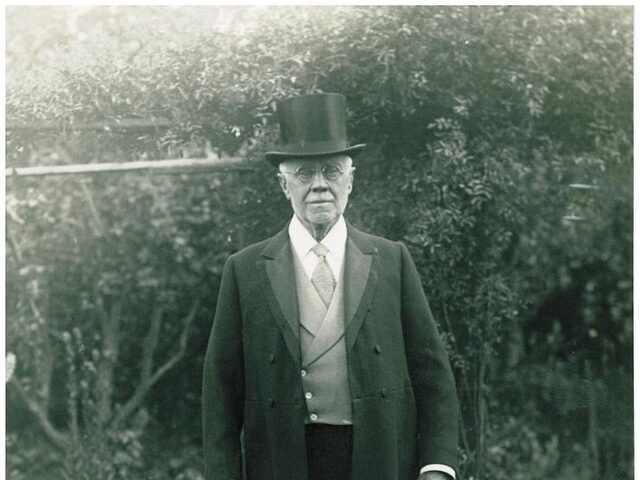
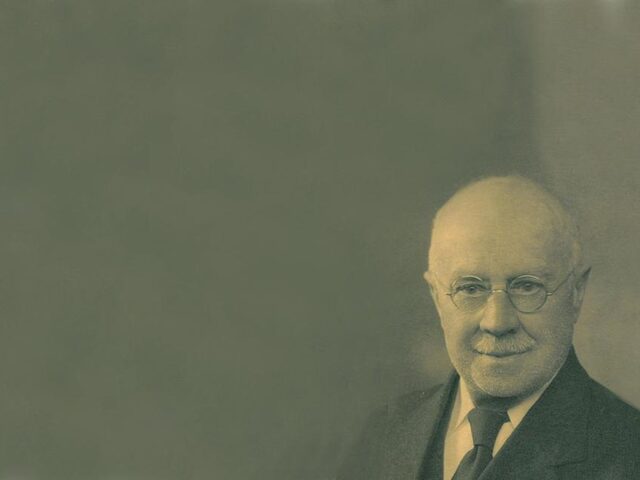
Firm established by George Houlton Senior (1854 - 1938)
George was born in the village of Ulceby into an extensive country family of craftsmen, farmers and Methodist preachers. He was apprenticed in 1870 to William Bainton of Flixborough and in 1879 moved to Hull to go into partnership with his brother John, who was already running a successfully joinery business. The partnership lasted only a week before George decided to go into the building trade on his own. He arrived in Hull during the biggest boom in the city’s history, when tonnage at the docks grew 132% between the years of 1862-1882 (an average of 6.6% per year). They said that if all the ships of Hull could be laid end to end at this time they would have stretched for over 11 miles. Trade was booming and so was construction.
The two brothers would work together in later years on many contracts, although these large projects were a long way from George’s initial set up of himself and a few apprentices. There is no doubt that his brother helped him in finding work in the early years and possibly loaned him money to buy a site in Dover Street off Princes Avenue, where he built his first two houses, followed by two more off Sculcoates Lane in 1880.
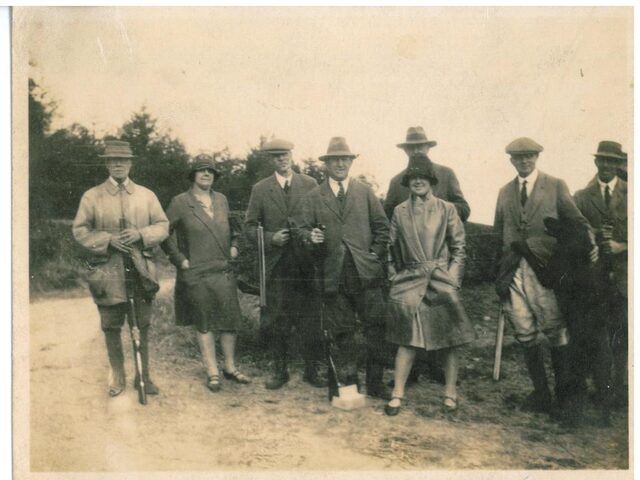
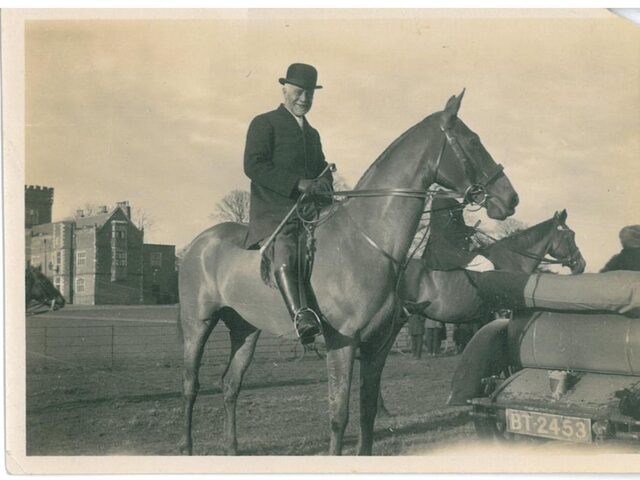
In his youth George had spent a great deal of time on the Lincolnshire estates of the Earl of Yarborough, and he was such an accomplished rider that he was reputed to be able to ride any horse at the age of 10. He first rode with the Holderness Hunt in 1884 at the age of thirty and continued up until his eightieth year, never missing a season. At his farm in Molescroft he bred hunters and polo ponies and was a well known figure at the Westbourne Avenue Polo Ground and at the country estates of the North and East Ridings. He was a member of the Hull Polo Club and played for the first team. For many years he visited Ireland for the Dublin Horse Show and usually brought back hunters or polo ponies.
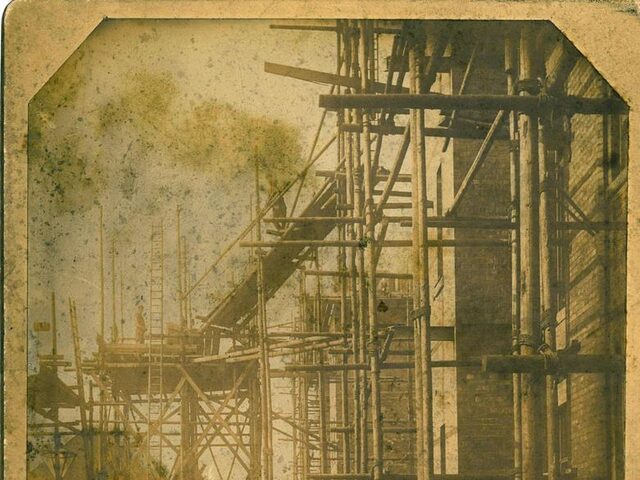
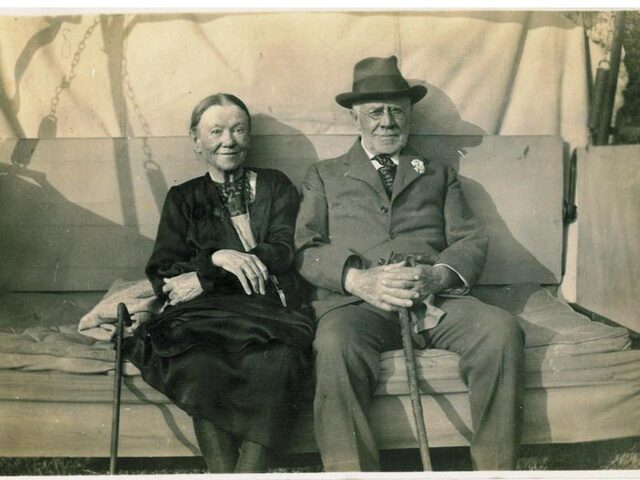
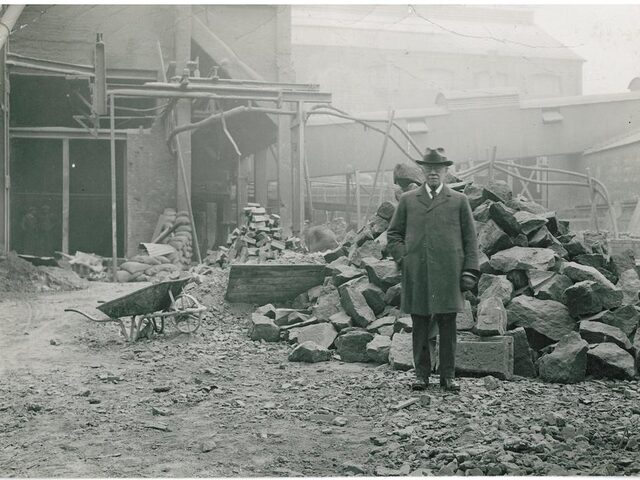
1882
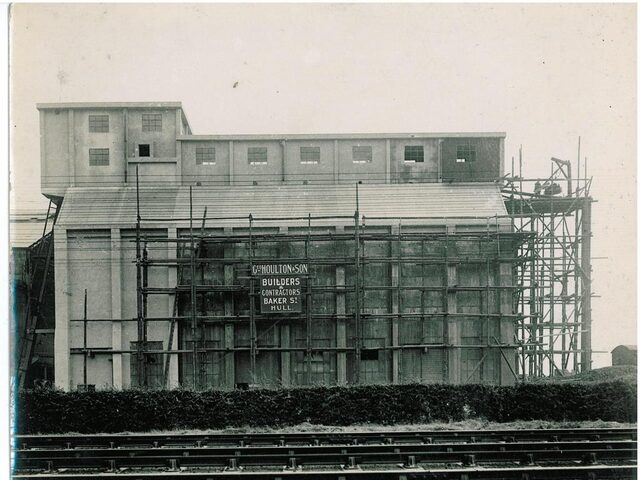
Builders yard established at 16/17 Walmsley Street, Hull
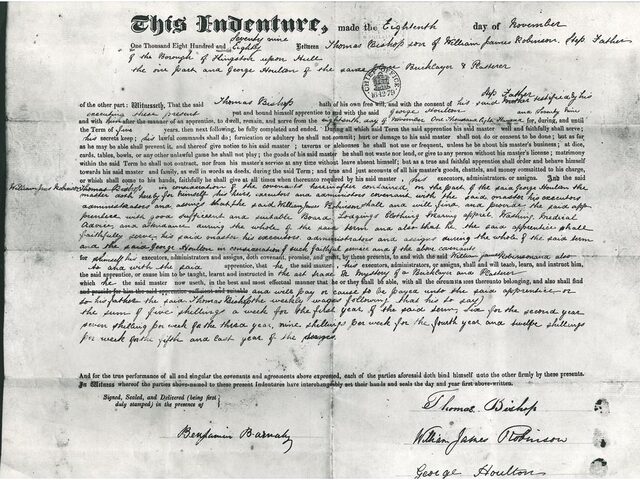
By 1882 George had a builders yard at 16/17 Walmsley Street off Spring Bank and was living nearby at 3a Milton Street, off Vane Street. He was listed in the 1881 census as “Master Builder employing 1 man and 19 boys”. One of these was Thomas Bishop, the company’s first indentured apprentice, taken on in 1879 and retiring in 1936 after 57 years. Still a small business, George’s wife Marie was in charge of all the accounts and office management, as well as bringing up their family of five.
His first high-profile contracts at this time were the Black Lead Works (which would become part of Reckitts) and the original William Booth Mission House on Castle Street. George had begun to develop business relationships with many companies in the area, most notably Earles Cement, with whom he placed his first order in 1879. The working relationship between the two companies was to prove crucial in later years.
1886
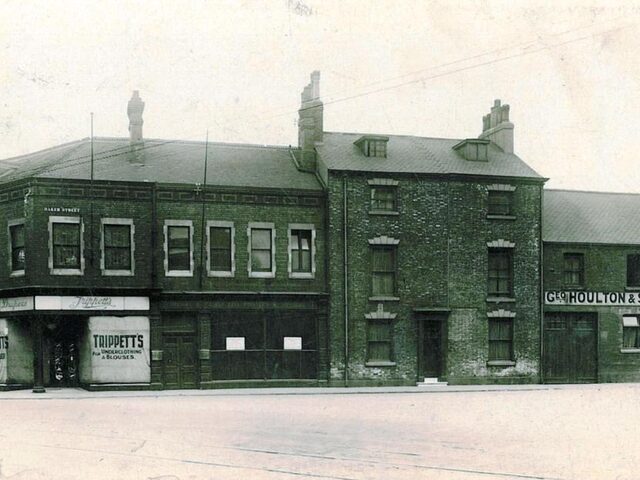
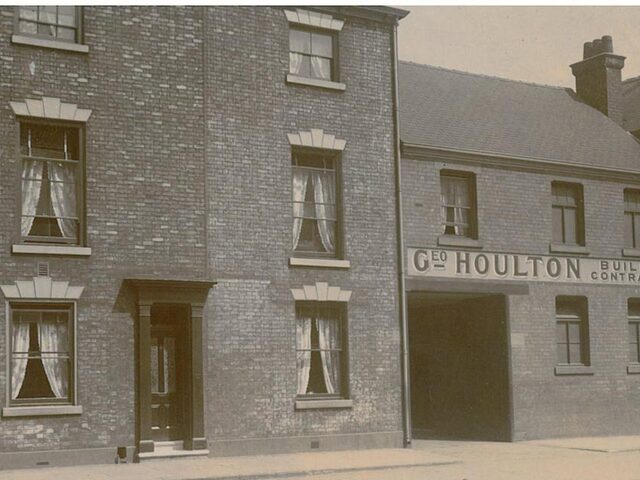
Move to 6 Baker Street, Hull
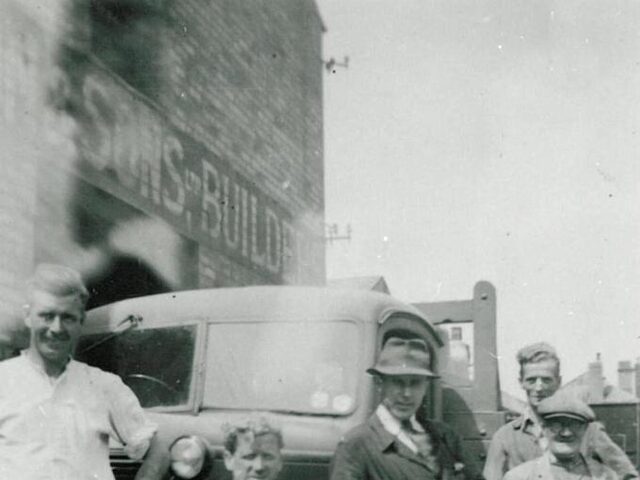
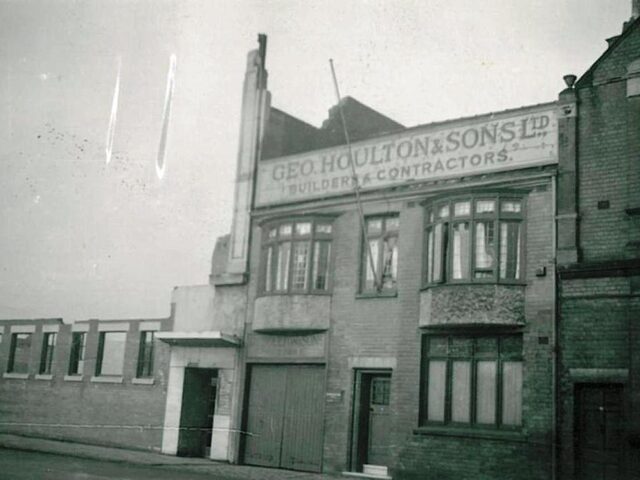
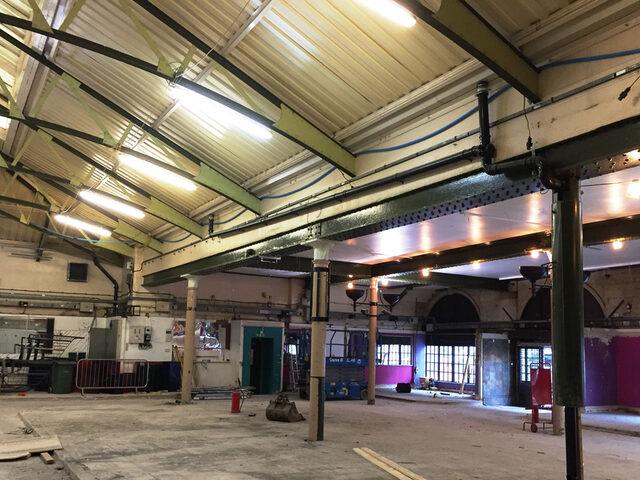
George and his family lived next door to the Baker Street yard, which remained the firm’s headquarters until 1960. George’s typical day started at 4am and when not working he would be attending to his horses or be out riding. The original yard, having survived the Blitz, was left derelict in the 1980s and demolished in 2000 to make way for a nightclub, itself now vacant.
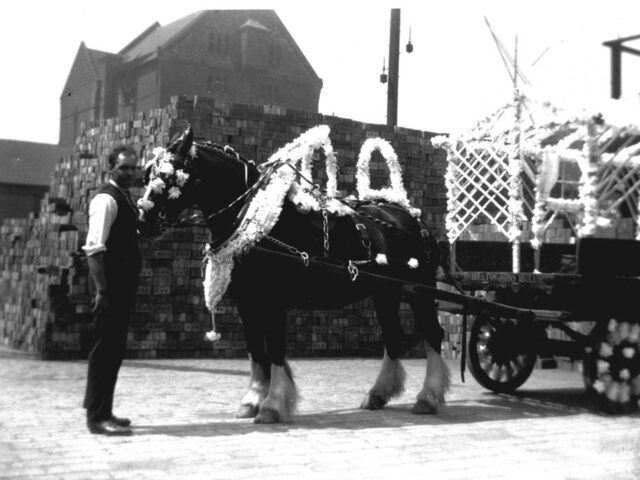
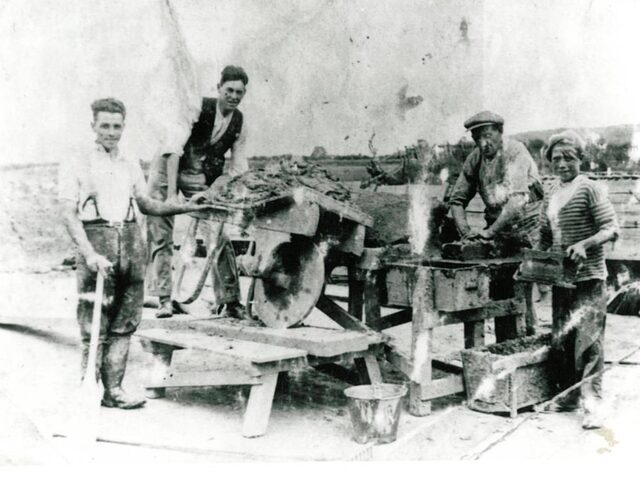
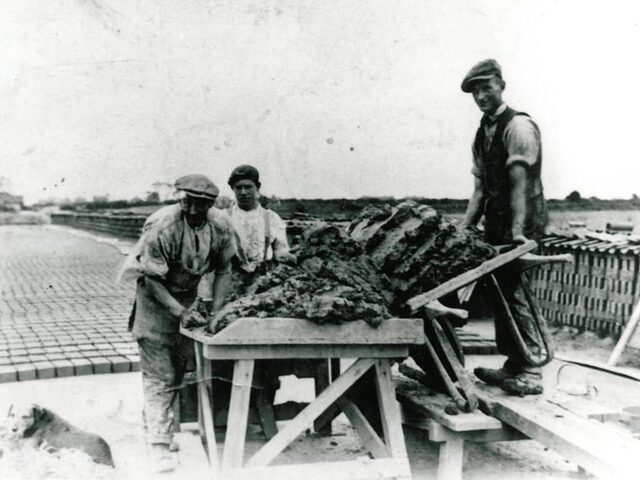
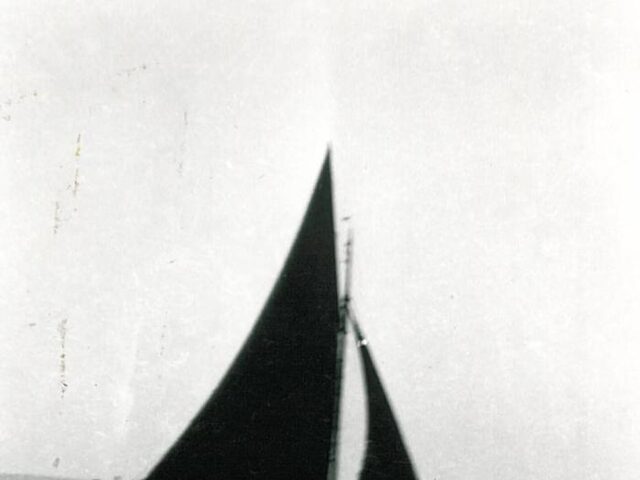
At this time the firm’s other premises included a joiners shop, stables and yard in North Street and a Wharf in Lime Street, where bricks, sand and gravel from Lincolnshire were unloaded. The company used horses until 1947, taking them down to the ‘Oss Wash every evening, and the accident books from the time are full of equine-related injuries. Houlton used the Franks bricks from Barton-Upon-Humber for many years, brought across the River Humber to the Lime Street Wharf on special brick sailing barges.
1893
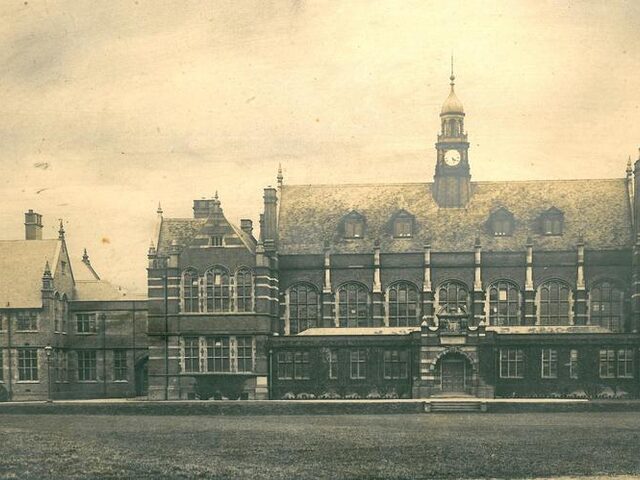
Hymers College
The firm’s tender for Hymers College was accepted on 20th October 1890, with amounts of £4 and £3 separating it from the next two bids. The estimated cost was £11,500. The contract was signed on 20th December and the date for laying the foundation stone was fixed for 21st January 1891. The time for completion of the building was 15 calendar months. This was, at the time, the largest and most prestigious work the firm had undertaken.
Despite this projected completion time, the college was not finished until July 1893, due to two very severe winters when 115 working days were lost, as well as ongoing strikes by the bricklayers and masons. In September 1891 George Houlton and the mason Mr. Panton were called before the Architect and Building Committee to explain the slow rate of progress, and were granted the 1893 extension. Hymers College is still in use today and Houlton has contributed to many of the main campus buildings.
1897
1897 - George Houlton Junior (1882-1940)
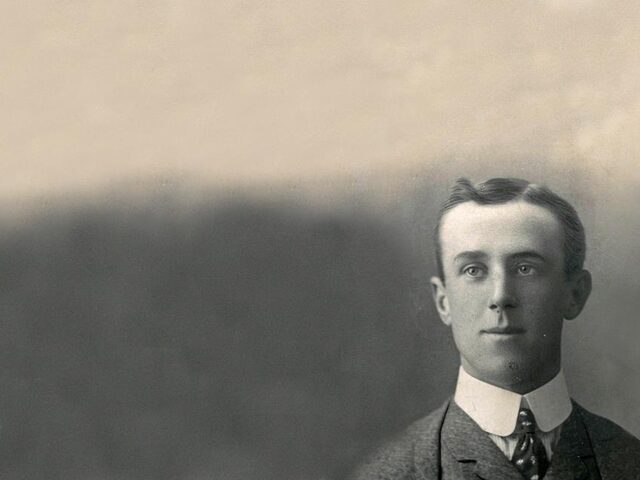
George Houlton Junior joined the firm straight from Hymers College, where he was one of the first pupils.
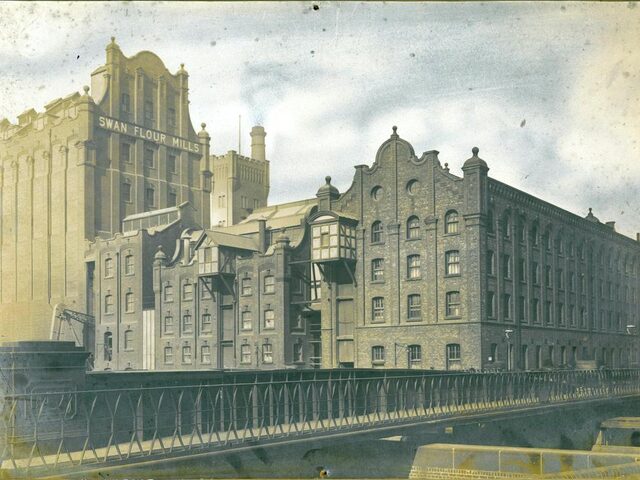
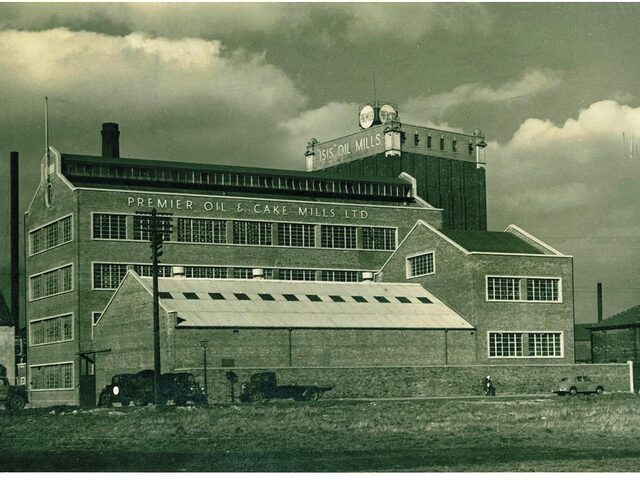
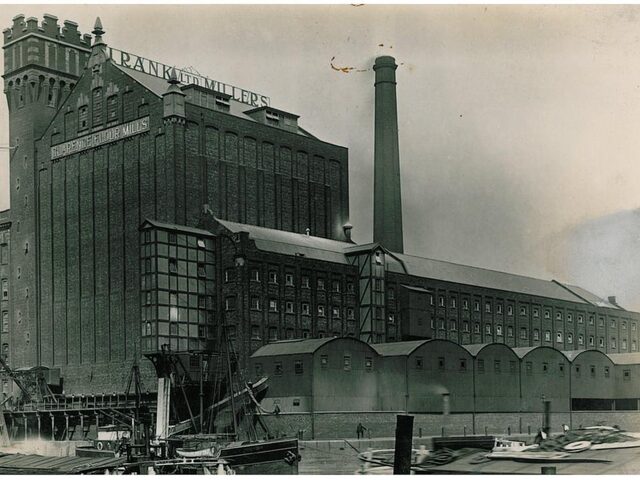
George and his brother John entered the company during its first boom period. During the 1890s the port of Hull was at its peak in terms of imports, the city’s manufacturing industry (previously poor) was taking off, and everybody needed mills, warehouses and silos. In 1891 alone Hull imported over 2 million quarters of wheat, 50,000 baskets of yeast, 24,000 tons of oilseed cakes, 97,000 tons of iron, over 1 million hundredweight of refined sugar, 2.5 million tons of coal and a massive 60 million lbs of wool and wool rags. This was the age when the River Hull became lined with the great grain silos and flour mills which would dominate the skyline for many years, and the company built the Swan Flour Mills, Eagle Oil Mill and Silo, Premier Oil and Cake Mills (originally Wray Sanderson), Hurtley’s Mills and the Jospeh Rank’s Mill and Silo, one of the few remnants of this era still standing. Most of these were built for the renowned Hull architect Sir Alfred Gelder.
Following the First World War, George was appointed President of the Hull and District Association of the National Federation of Building Trade Employers and for many years took a leading part in its affairs. He also took over from his father the day to day working of the business, but still found time for hunting, polo, point-to-point racing and shooting, together with boxing, becoming a judge for the Northern Counties. Indeed these pursuits were said to take up more of his time than the running of the firm, and his well-known phrase became “you’d better ask my brother John”.
The house at 6 Baker Street was eventually sold to make way for Trippetts store. George Senior moved out to Molescoft Farm, George Junior lived at 2 Baker Street, and the remaining yard was adapted into an upstairs flat for John Houlton’s residence. This ensured that one of the partners was always available day or night to attend to business matters. Other ventures included the tenancy of a brick yard at Barton.
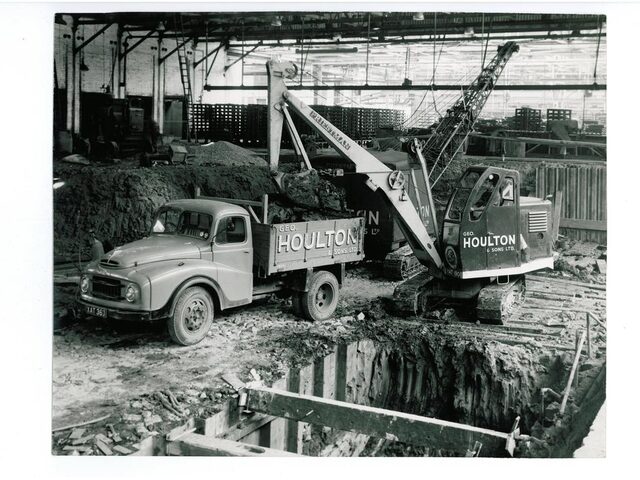
1904
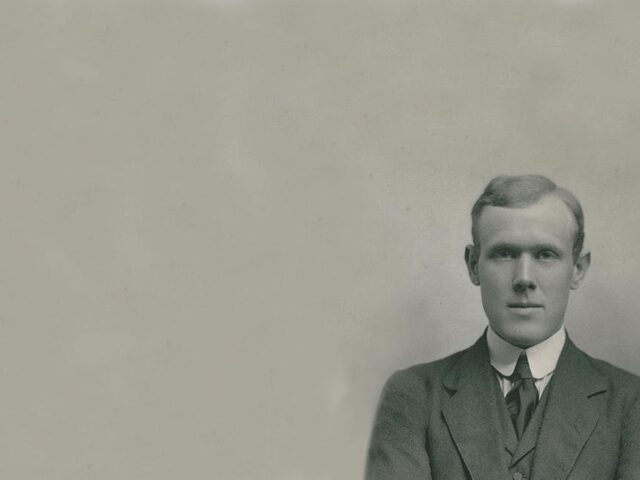
1904 - John Dale Houlton (1888-1957)
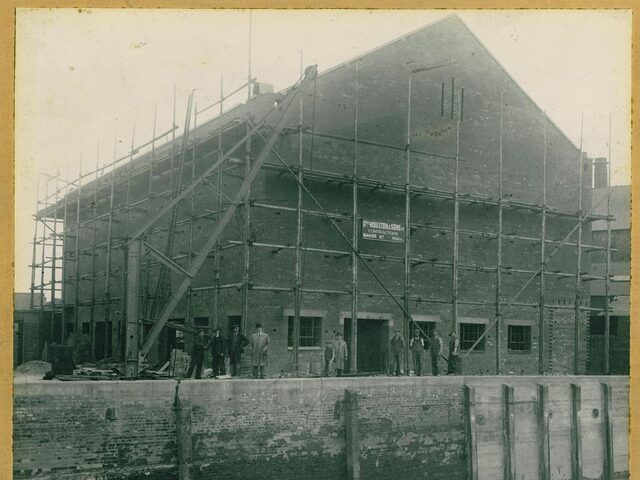
The business becomes “George Houlton & Sons”. Work continues to grow until the onset of World War I.
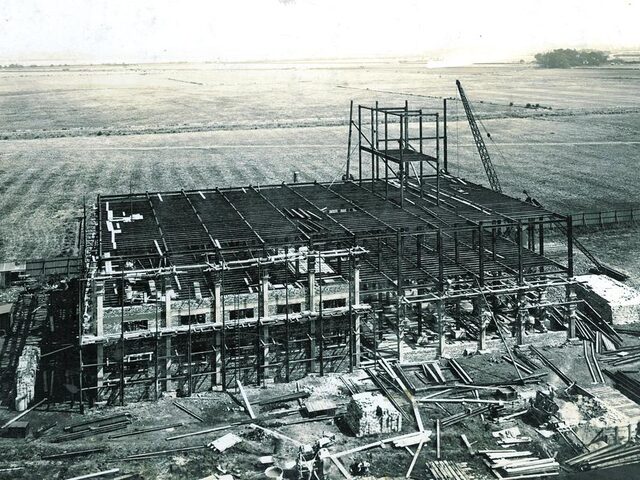
At his father’s wish, John Houlton was apprenticed as a bricklayer in 1904 and went straight out onto the sites. He worked on all the large mills and silos being built by the company at the time, as well as seeing active service. During the First World War his father, George Senior, was contracted by the War Office to buy horses for use in France, due to his expert knowledge.
Important contracts at this time included the Chambus & Fargus Warehouse, the initial British Vinegar Factory (now BP Saltend), and the two “bread-and-butter” contracts of Ideal Standard and Reckitt & Colman, sites where the company worked almost continuously for the next 70 years.
John was made Partner in 1916 and would manage the firm through much of the Second War, and was faced with many problems of staff shortages and lack of work, as well as constant disturbances during air raids and his own occupation of ARP warden. He retired to Hornsea in 1948, but like his father he could not settle and after a few weeks started travelling each day to the office. Eventually he returned to live in Hull and continued putting in a full day's work until his death in 1957, after a short illness.
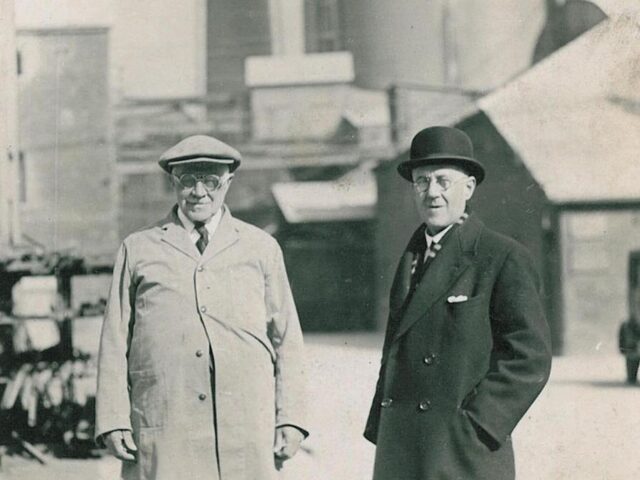
1931
1933 - The Moratorium
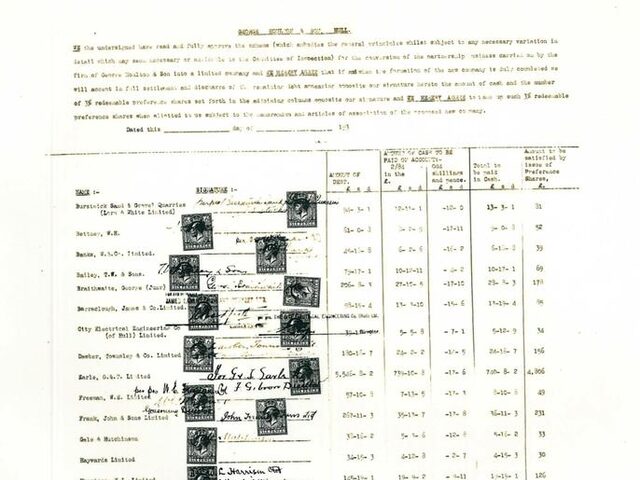
The 1920s and 1930s brought severe trade depressions, which caused the near-bankruptcy of the firm.
In April 1933 a meeting of creditors was called and a moratorium on the company declared. A combination of over-expansion in the early 1920s and the subsequent trade depressions meant that the company was left with severe outstanding debts. To make matters worse, the properties in North Street were the subject of compulsory purchase for demolition to allow the new Ferensway project to go ahead, and ventures such as the tenancy of the Barton brick yard failed to make the capital promised. The family pursuits of hunting, polo and horse breeding had also severely drained the firm’s accounts, and not enough control had been kept on the outgoings of the business. As John Dale always stated, “horses require a bottomless pocket”.
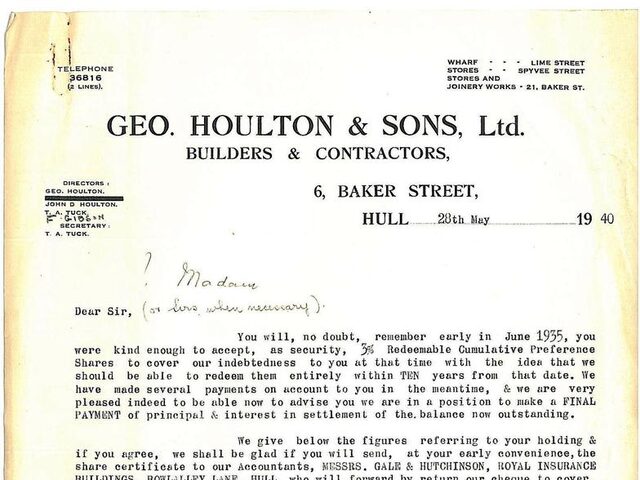
The close-knit Hull business community and the long-standing nature of George Houlton Senior’s business dealings meant that creditors were persuaded to hold over the debts owed. Earles Cement, the largest creditor and oldest client, agreed to keep the company afloat in those years, taking the largest interest share. The company continued to trade under the general control of a Committee of Inspection appointed by the creditors and was strictly audited.
1931
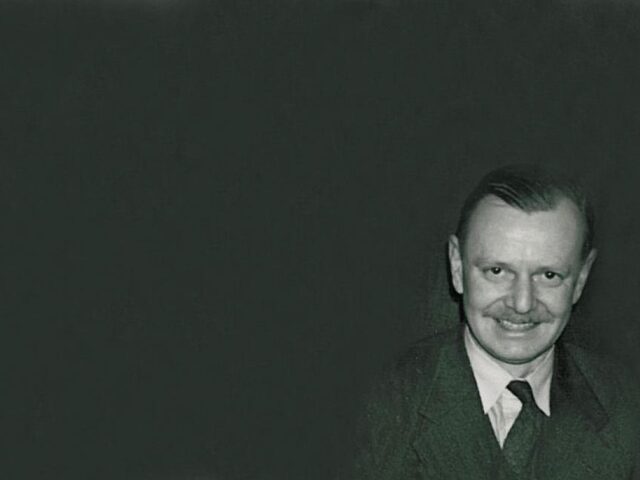
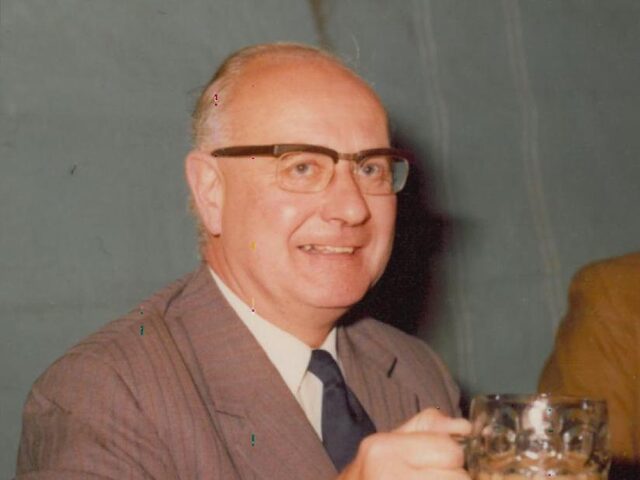
1931 - George Dale Houlton (1915-1984)
John Dale and Amy Houlton's eldest son George joins.
George Dale attended Hymers College with his younger brothers Dick and Peter, and joined the firm in 1931 managing the accounts.
He returned after the war in 1947 to assist his father with the running of the company, again on the accounting side. Work improved dramatically after the Second World War, with many new building projects for private firms and city-wide.
George took over as Managing Director in 1957 following his father's sudden death. Reluctantly, he had to step down in 1960 due to ill health and then took a part-time position dealing with the company's accounts until his retirement to Hornsea in 1980.
1932
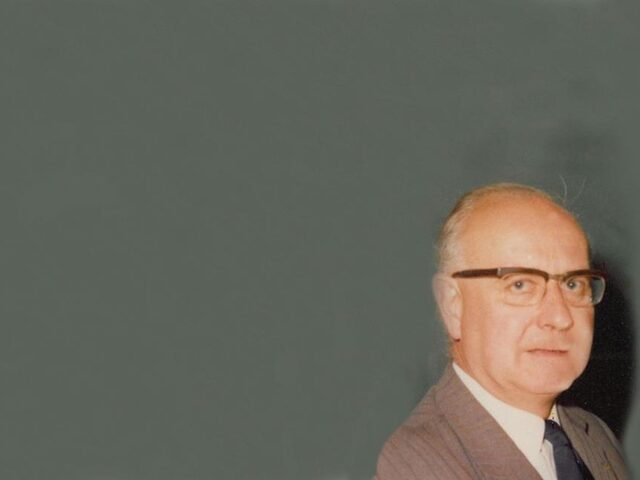
1932 - Richard Edward Houlton (1916-2006)
John Dale Houlton's second son Richard (Dick) enters the business.
“Mr. Dick”, as he became known, joined the firm in 1932 as an apprentice bricklayer after studying at Hymers College. The early 30s was the only time when three generations of Houltons were actively involved in the business: George Senior as founder and Chairman, George Junior and John Dale as Directors, and George Dale and Dick in the office and onsite respectively.
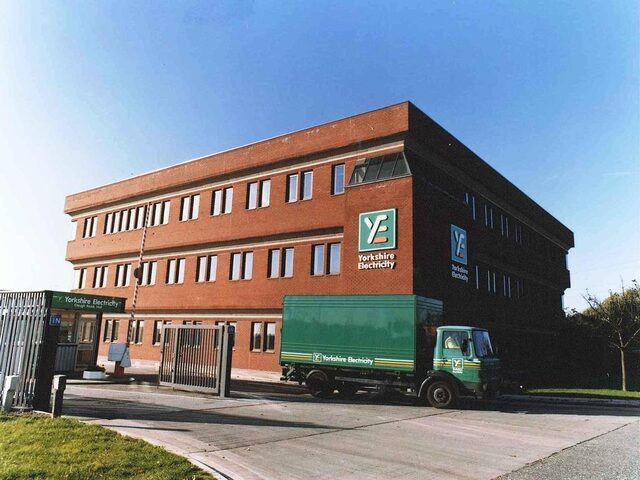
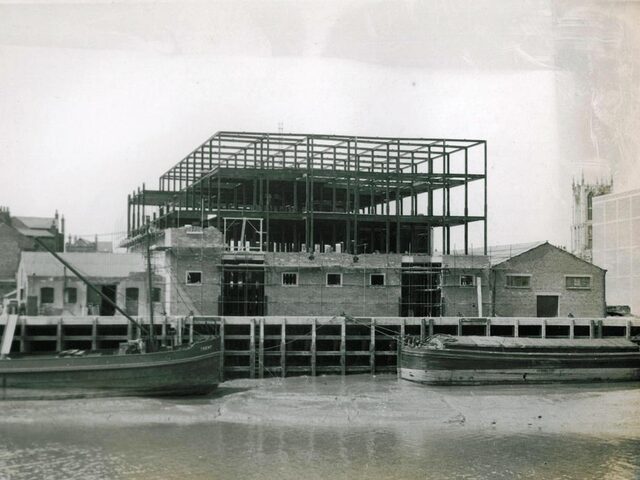
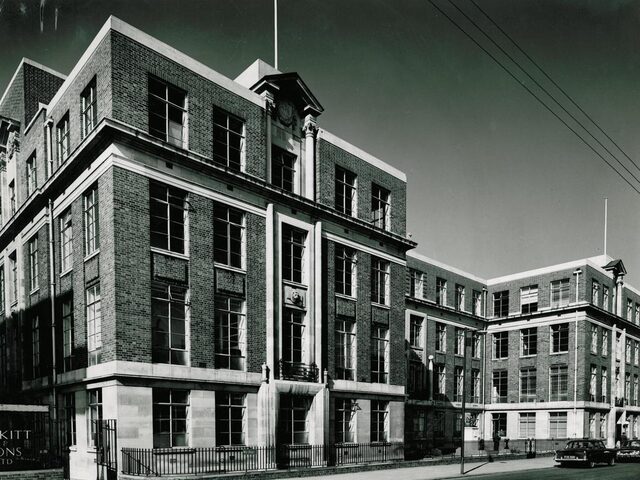
Dick returned to the firm after the Second World War and with his brothers was involved in many of the subsequent rebuilding projects in the city. Notable amongst these were warehouses for Gilyott’s on the River Hull, extensions to Joseph Rank Mills, Reckitts, Ideal Standard and BP, and other works for Hull Brewery, Priestman Brothers, Needlers Ltd. and the Yorkshire Electricity Board. He became Chairman in 1960 and oversaw a new period of expansion during that decade, as well as great changes to the building industry. Dick retired in 1976 to Brompton in North Yorkshire, where he continued to play golf and spend time with his family, coming back to Hull occasionally to check on things. He died after a short illness in 2006, in his 90th year. He was an active member of the Rotary Club, the Hymers Lodge and the Hull Masonic Lodge.
1935
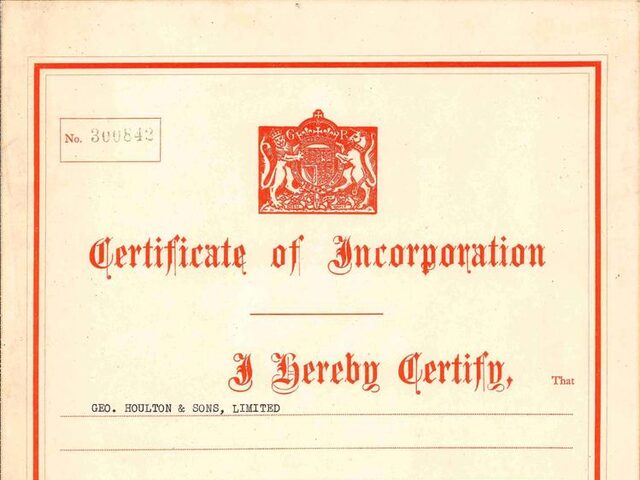
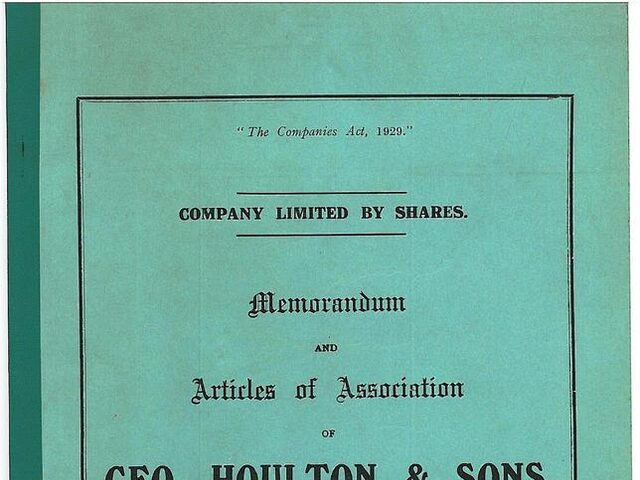
1935 - Houlton incorporated as a Limited Company
The formation of a limited company was achieved on 17th May 1935.
The original partnership business became a limited company at the advice of the inspectors and auditors. The outstanding debts were discharged with a cash sum and 3% redeemable preference shares, the main shareholders now making up the company creditors and family members.
Thus a new era of “George Houlton & Sons, Ltd.” began, with George Junior and John as managing directors. George Senior visited the office daily until his death in 1938 aged 84. As a mark of respect the subsequent Holderness Hunt meeting was cancelled.
1939
1939 - The War Years
The Second World War had a significant impact on the firm and its fortunes.
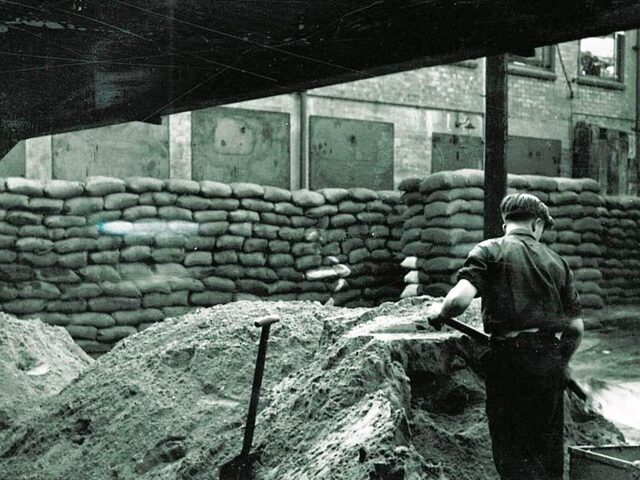
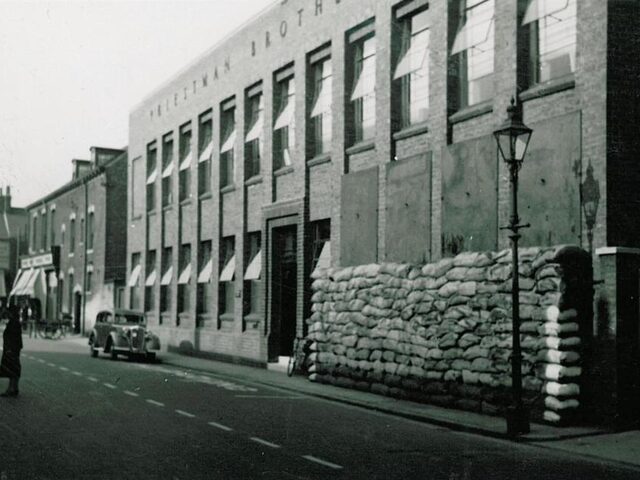
With the death of George Houlton Senior, the company was now joint-managed by George Junior and John Dale with the surviving four children (Elizabeth, George, John, Emmie) as shareholders. The outbreak of the war had seen the cancellation of many contracts, although immediate work was found for War Office projects, particularly Holderness coast defense works including pill boxes, ARP shelters,emergency water tanks and air raid repairs.
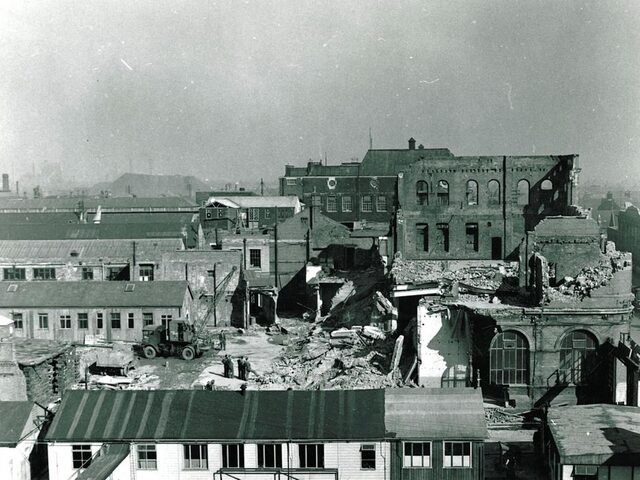
After the upheaval of the Moratorium there was little period of adjustment before the death of George Senior, the declaration of war and George Junior’s sudden death in 1940. This placed the wartime burden of running the company on John, and it is to his credit that the firm kept going in spite of being left with a skeleton staff of older employees and young apprentices not eligible for military service. The yard in Baker Street was one of the few buildings to survive the widespread damage to the city centre, and was almost destroyed by incendiary bombs and land mines. Much work at this time was the clear-up and repair of air-raid damage, in between Home Guard and ARP duties which most of the staff carried out as well as their usual working week. Hull's position on the East Coast meant it was heavily attacked by the Luftwaffe bombing raids with over 1,200 people killed and 95% of all housing damaged or destroyed.

1946
1946 - Peter Frank Houlton (1921-2002)
John Dale's youngest son Peter enters the business, marking the beginning of the postwar years.
Peter studied Building at Night School after attending Hymers College followed by National Service. After a brief period working for Earles Cement he joined the family firm in 1946. He managed many of the rebuilding contracts in what proved to be one of the firm’s busiest periods, including Reckitts, Gilyott’s warehouses on the River Hull and Premier Oil and Cake Mills.
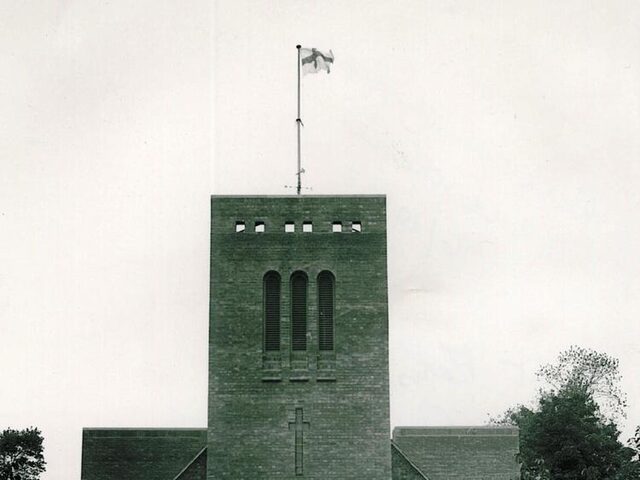
He was made Managing Director in 1976 and Chairman in 1993. Like his father and grandfather, Peter never really “retired”, but still came into the office most days, only cutting down a few years before his death in 2002. He was a keen photographer and gardener. After his death the firm gifted £10,000 in his memory to his parish church of St. Mark’s in Anlaby, which the Company originally built.
1960
1960 - Company moves to Hyperion Street, Hull
A time of further successful expansion in a period of great industry change.
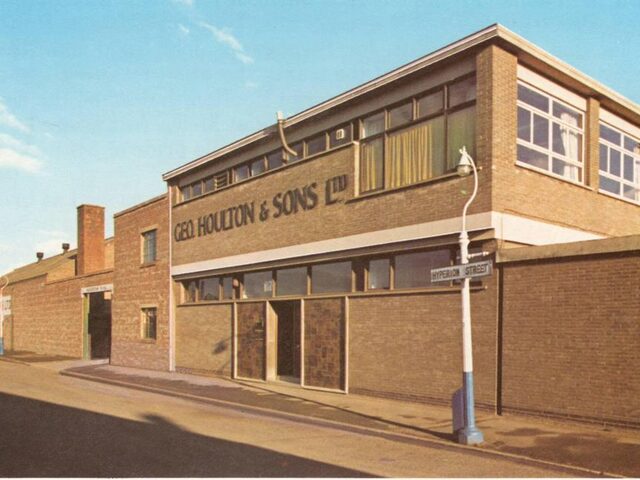
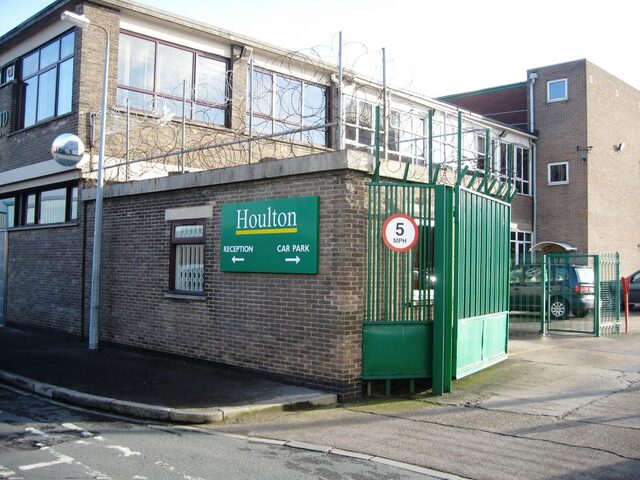
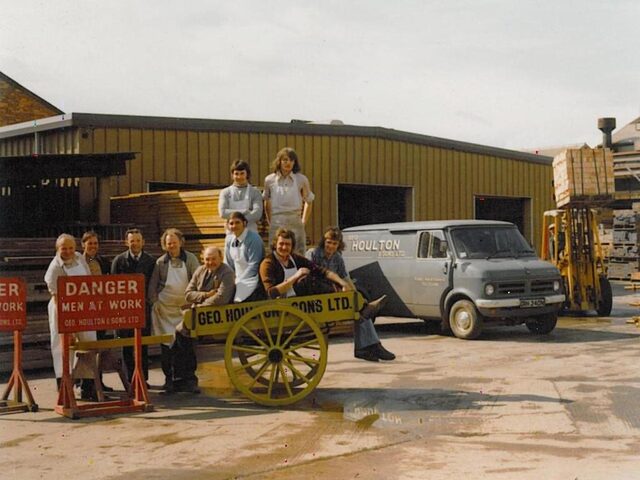
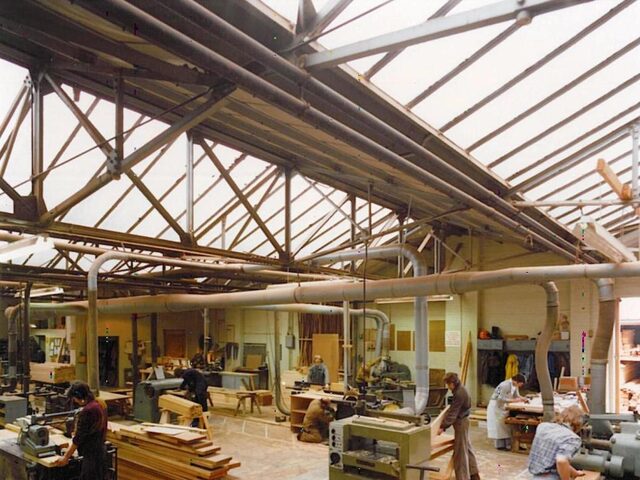
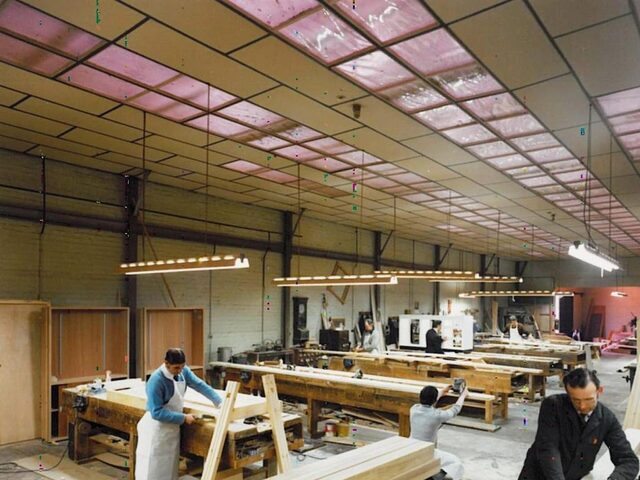
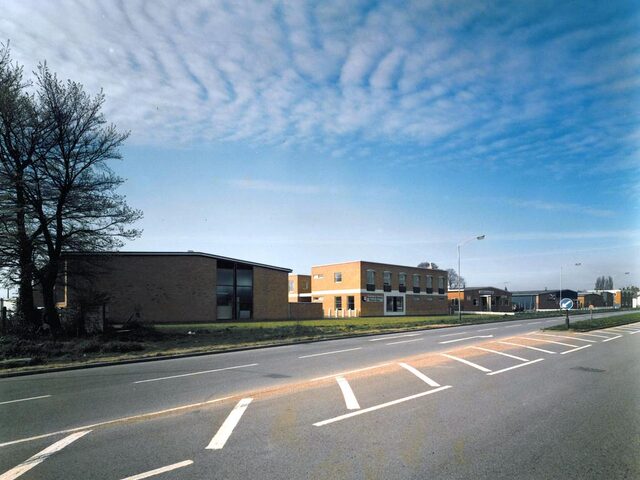
After 74 years with its office and yard at Baker Street, the company moved in 1960 to new purpose built premises in Hyperion Street, Hull, where they remain to this day. Previously the site had been used by Albion Saw Mills and Timber Yard, Crown Turning Works and Nettleton's Stables Muck Yard and Tripe Factory. Since that time additional office accommodation has been provided and adjoining premises purchased to allow for the continuing expansion of the business. The offices were entirely refurbished in the late 1990s. The move not only enabled increased space for site and office but also meant the joiner’s shop could be amalgamated with the builder’s yard into the same premises.
The move proved to be a wise one as the old Baker Street yard could never have coped with the modern plant demands of today: in purchasing the yard and breaking with tradition Dick Houlton ensured the continuing success of the company and raised its profile in what proved to be an increasingly regulated and competitive industry. From the 1960s until the early 1990s the joiners shops saw large turnover, sometimes with over 40 joiners working in the sheds, but now much of the old warehouse space is devoted to storage as large scale onsite joinery is very rarely required.

1966
1966 - Robert Houlton
Peter Frank Houlton's eldest son Robert enters the business.
Part of the fourth generation, Robert Peter Houlton entered the business in September 1966 as a Trainee Surveyor straight from Hymers College. In 1971 he moved to the Accounts Department where he still works today, working closely with the Building & Maintenance division. His hobbies include railways, travel and following Hull City football team.

1967
1967 - David Houlton
David joined the Company straight from school in September 1967 serving 7 years as Apprentice/Trainee Plant Fitter, attaining membership to the Institute of The Motor Industry in 1974.
In 1976 David became assistant Plant Manager and also took up additional duties as assistant Safety Officer. 1984 saw him appointed Director of the Plant division and the following year formed Drypool Plant. This is a subsidiary of the Houlton group and provides a service to its Construction and Building & Maintenance divisions. David retired to Driffield in 2009 after 42 years in the firm.
1968
1968 - Houlton joins Butler Building Group
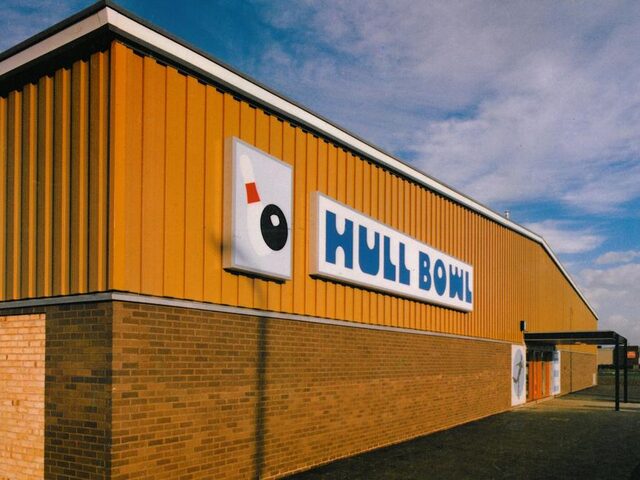
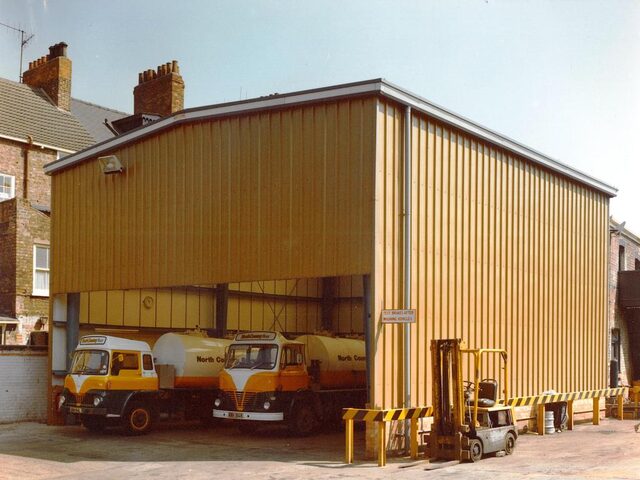
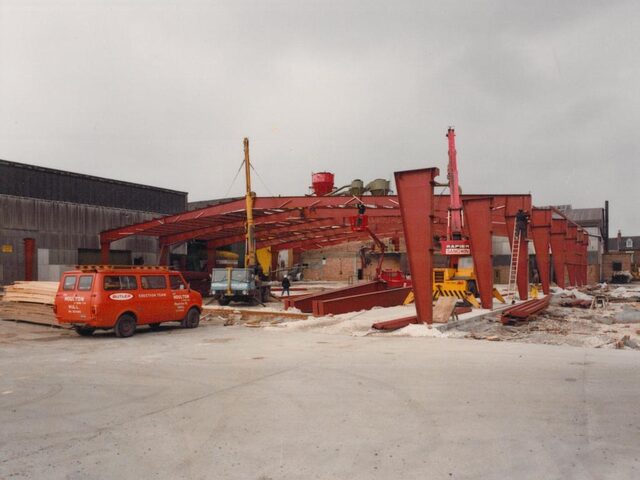
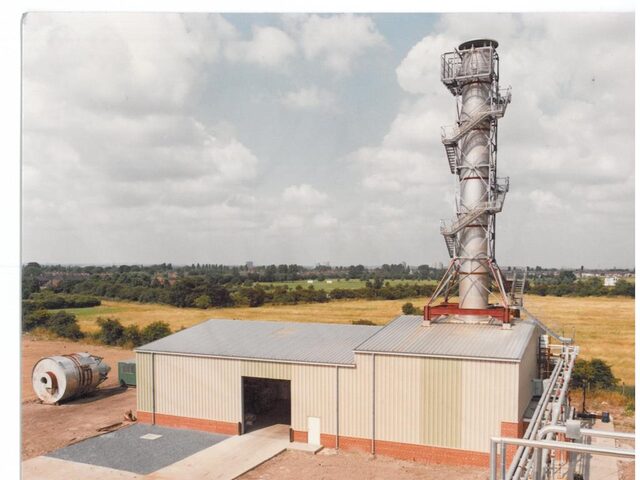
Butler were the largest producer of pre-engineered buildings in the United States and had a manufacturing plant in Kirkcaldy in Scotland. Their system buildings were a very early form of design and build
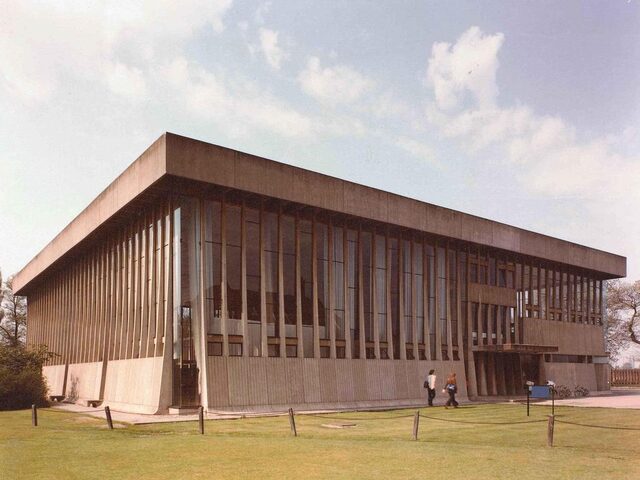
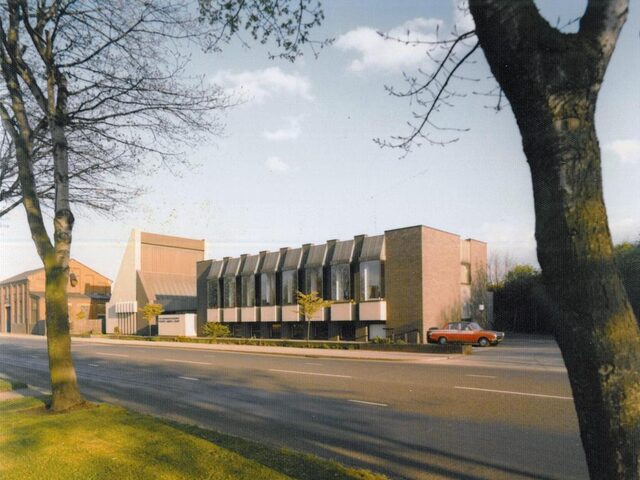
The Butler franchise added to what had proved a successful decade in terms of the Company’s portfolio, with several high-profile jobs in the city such as Hedon Road Missions to Seamen, Hull University Sports Centre, extensive work for Premier Oil and Cake Mills (now Croda), Priestman Brothers, Hollis Brothers and Reckitt & Colman.
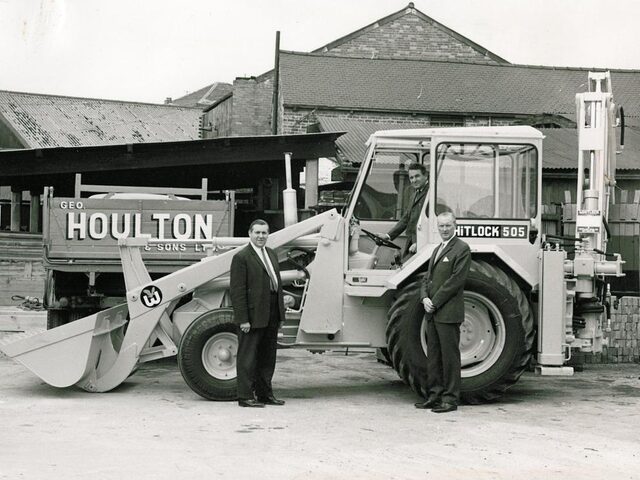
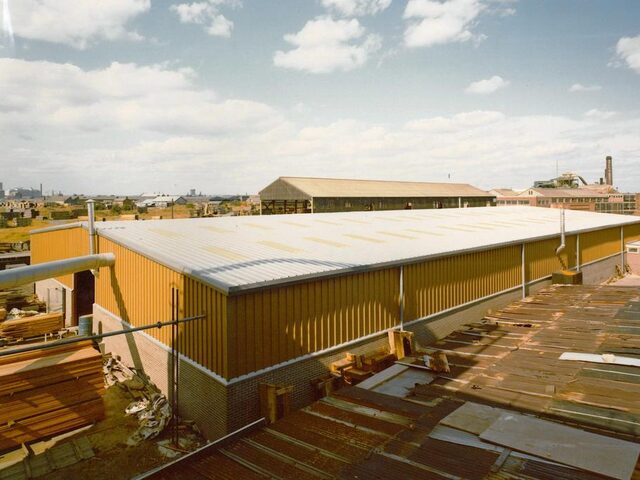
This franchise put the Company at the forefront of new construction technologies at the time, and proved an important benefit during the next decade. The Butler contract enabled the company to complete over 200 structures in the area in the next 20 years, such as Springfield Way development at Anlaby, Hull Bowl, Hull Ice Arena, indoor bowling arena's around the country and numerous other industrial and comercial buildings. A building was even supplied to the Suez Purchasing Authority for erection in Egypt by others. The franchise was desolved in the early 1990s.

1970
1970 - Richard Gregory Houlton
Dick Houlton's son Richard Gregory enters the business.
Richard went to Hymers College and gained his Building degree at Brighton. Following a period with Sheffield builder Longdens he joined the firm in 1970.
He started out in the Building & Maintenance division before working in other parts of the business and became joint Managing Director in 1980 before becoming sole Managing Director in 1981. The early 80s was a difficult time for the firm, and Richard was forced to make a lot of staffing changes to keep the company competitive in what proved to be a very hard recession.
When his uncle Peter stepped down in 1996 he became Chairman, where he continues in the role today. He was President of the Building Employment Confederation in 1988 and 1989. Like his father before him he was a keen rugby player, turning out for Old Hymerians until into his 50's. He has been instrumental in diversifying the company’s remit into development projects and property portfolios.
1979
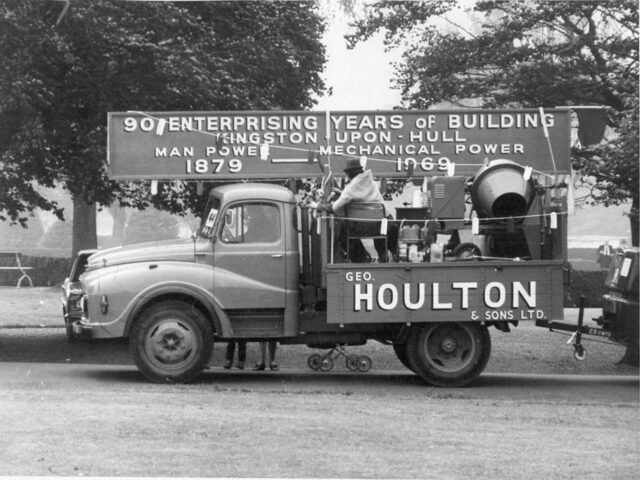
1979 - 100 Years of Building
The first century was celebrated in October 1979.
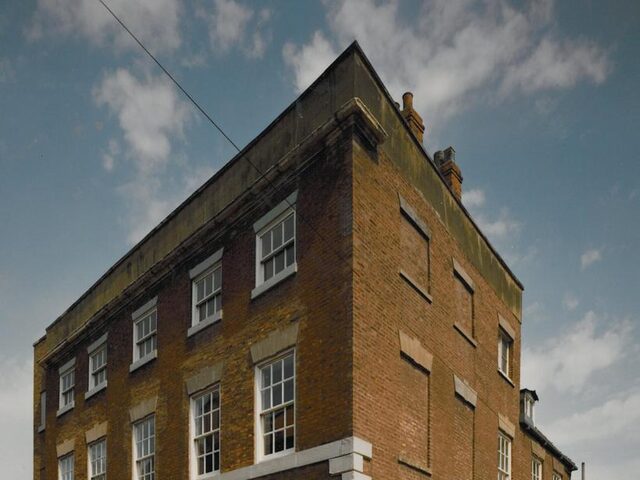
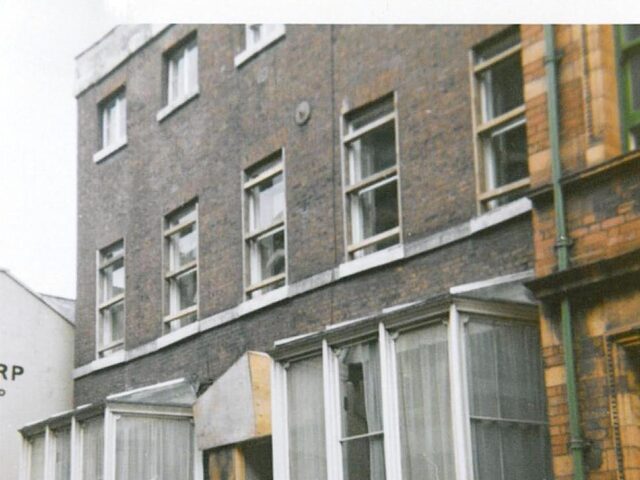
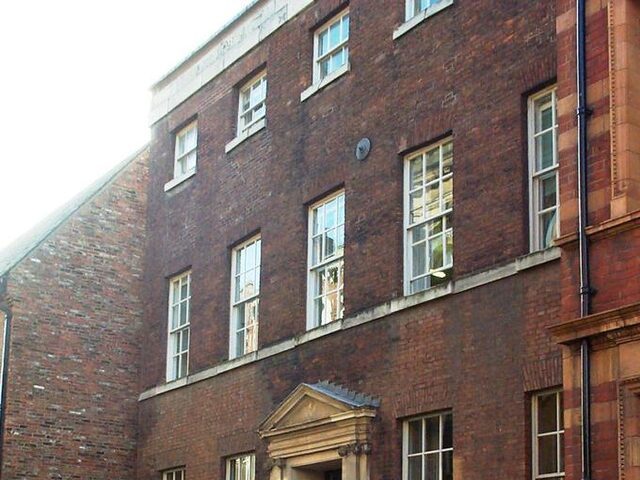
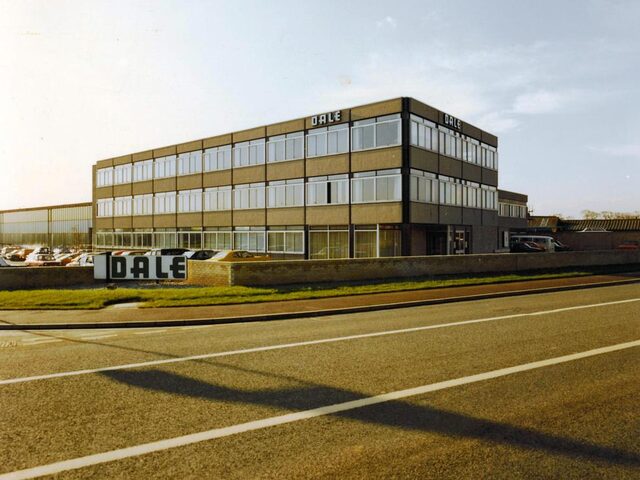
The century watershed was an occasion of great pride for Houlton and its employees, many of whom had been involved or connected with the firm from the early years. At the time the outlook for the future was good, and the company’s profile within the city had been raised considerably, from the large-scale work at Hollis Brothers, BP Saltend and Reckitt & Colman to more specialist projects such as the refurbishments of Maister House and Blaydes House on High Street, two of the finest Georgian buildings in the city. Other projects included Ennerdale Swimming Pool, Dale Electric head offices at Filey, the ill-fated Drax eel farm and a host of fitting, joinery and repair work for banks, building societies, homes and schools.
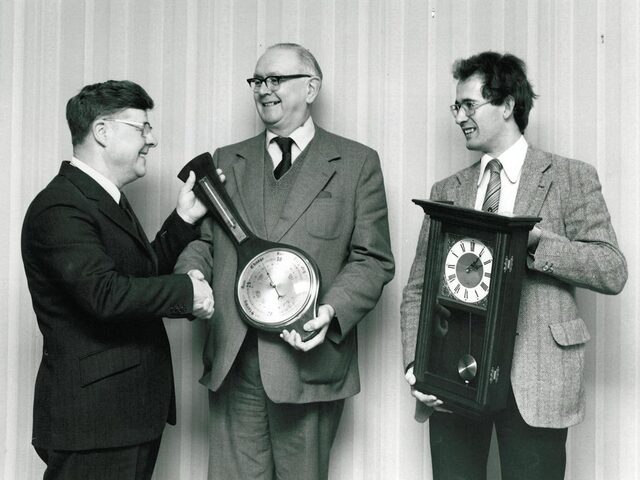
The occasion was marked by a series of celebration lunches for clients, suppliers, current and retired employees plus support of the David Whitfield Baby Unit facility on Ward 120 at Hull Royal Infirmary. The directors, Peter and Richard, were presented with a clock and barometer by the staff.
The early 1970s had been some of the firm’s hardest years, hit with threats of industry nationalisation, the three-day working week and widespread strikes, as well as fierce competition for work within the city. Just as this period came to an end Hull endured the upheaval of the 1975-6 Icelandic “Cod Wars” and the subsequent economic decline of the city. Changes in building practices, procurement procedures and the rise of multinational companies all affected the previously strong business relationships the company had maintained with what had been other family-run firms in Hull. It was hoped that in successfully reaching 100 years and ending what had been one of the most difficult times since the 1930s that a bright future was ahead.
1980
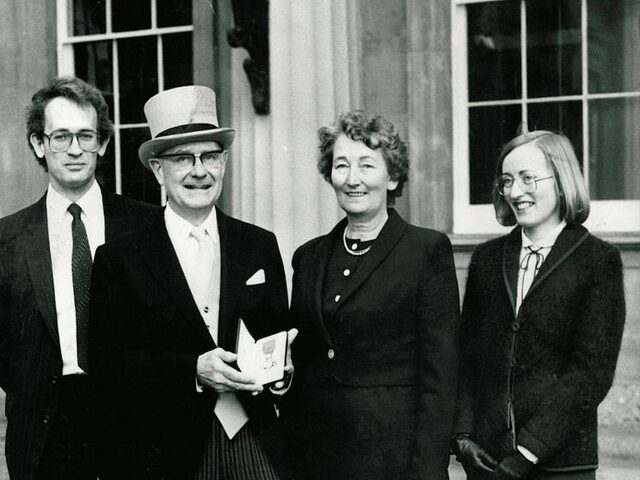
1977 - Richard Edward Houlton - MBE
Mr. Dick is awarded the MBE for services to construction industry.
Like his father before him, Dick steered the company successfully through difficult times and had overseen many major changes in the firm’s portfolio, profile and direction. At the time of the award, a year after his retirement, he had spent over forty years as part of Hull’s building and business community. He had been involved with the National Federation of Building Trade Employers, but had done a great deal of work in what became the Chartered Institute of Builders. He was also actively involved in Apprenticeship schemes and the training and development of young people within the industry, a tradition which Houlton still continues with work experience and apprenticeships. He was presented with the MBE at Buckingham Palace in October 1980.
1987
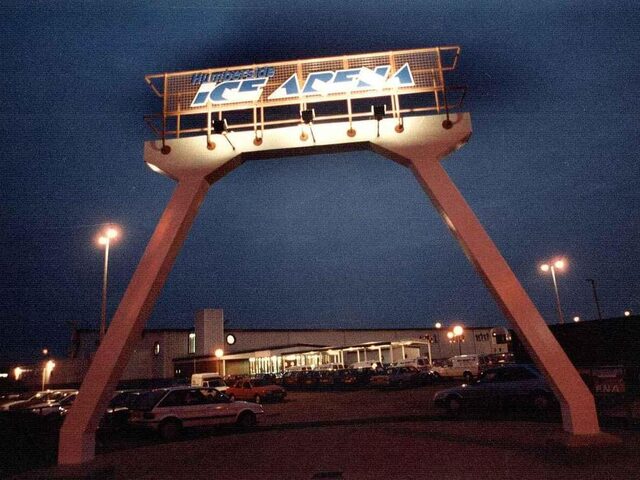
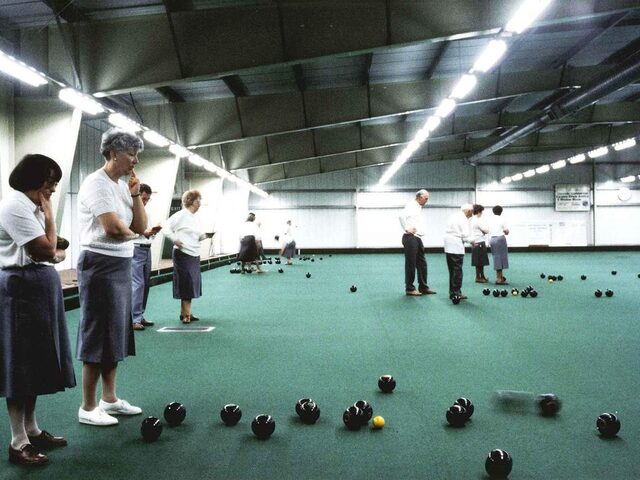
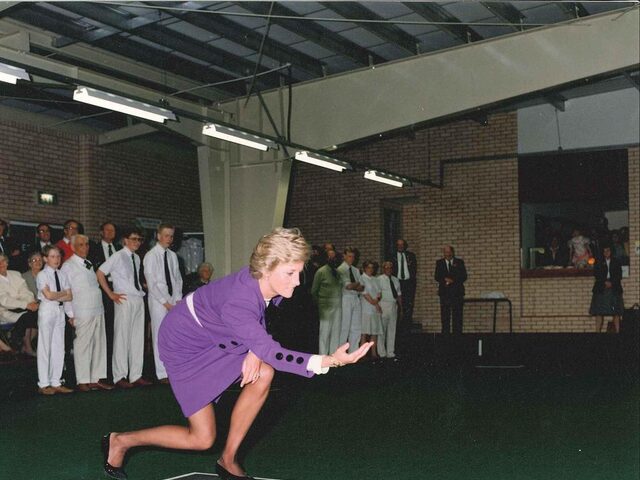
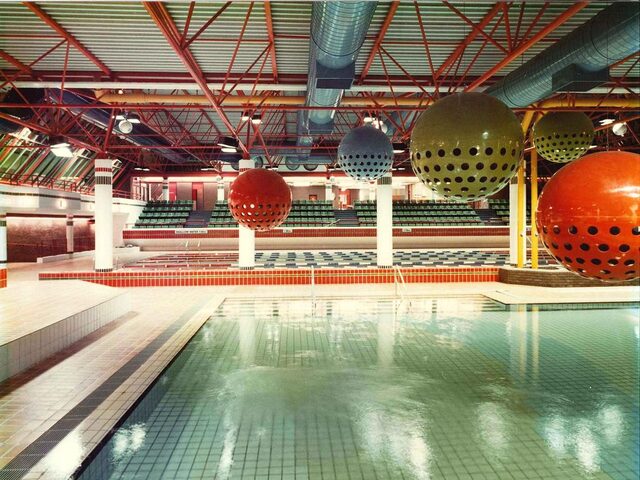
1987 - Hull Ice Arena & Indoor Bowls
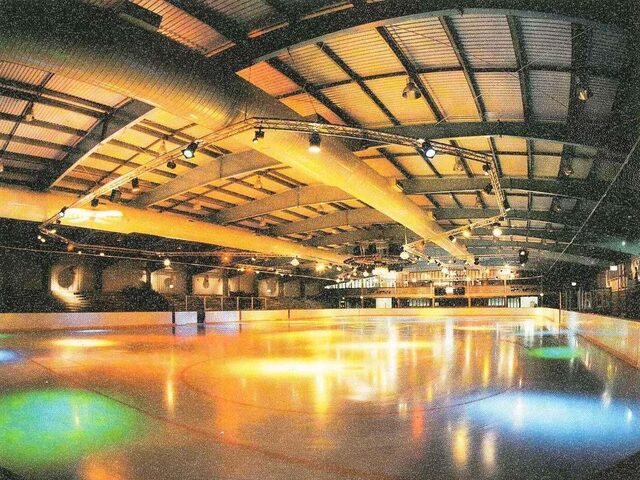
This arena was one of Hull’s biggest leisure redevelopment projects after the recessions of the Cod Wars and the early 80s.
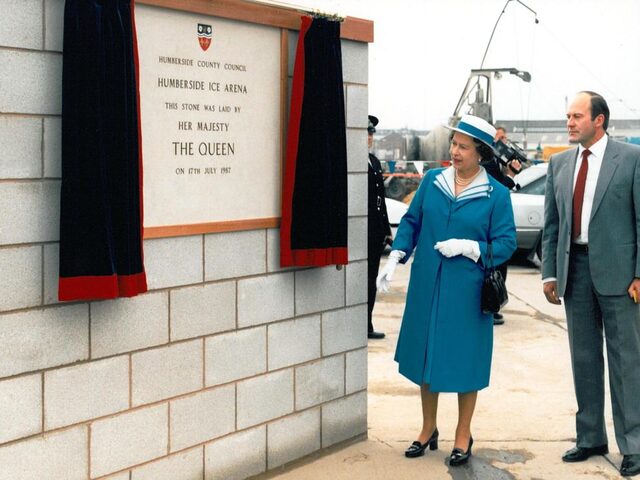
This prestigious, and at the time state-of-the-art project, had the foundation stone laid by HM the Queen in 1987 and was officially opened by John Curry OBE World and Olympic figure skating champion in 1988 and would set the tone for more public sector work than ever before. A series of Indoor Bowls Centres across the country were constructed during this period, including Charnwood Bowl Loughborough opened by Diana, Princess of Wales as well as centres in Barwell, Bedford, Camberley, Durham, Scarborough and Solihull. In 1983 the Ennerdale Leisure Centre had also been completed.
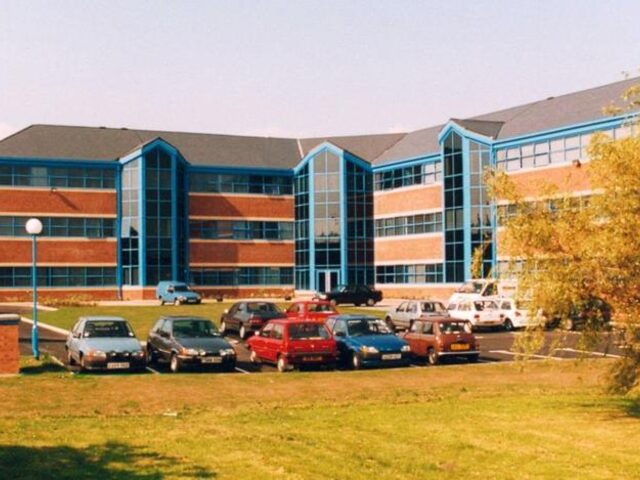
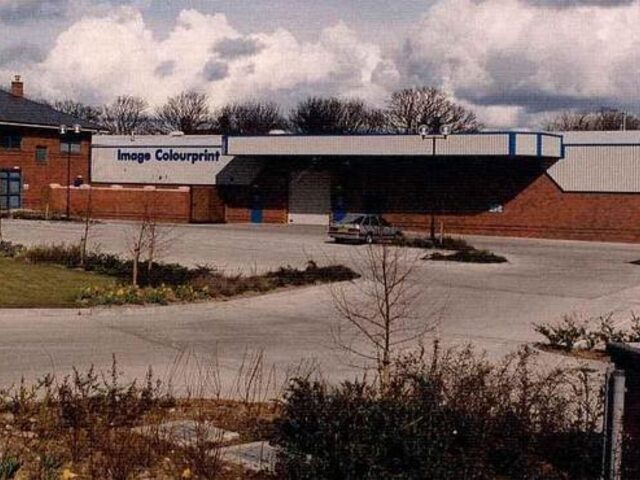
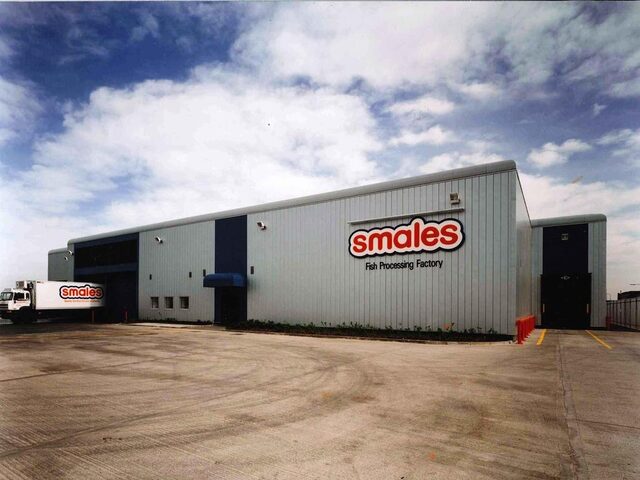
In 1990 the firm completed the fish factory for F. Smales & Son, also opened by Diana, Princess of Wales. The early 1990s saw a significant upturn in work, with high-profile jobs for Yorkshire Regional Health Willerby, British Gas on Clough Road, Image Data Systems and extensive redevelopment of 10 -12 George Hudson Street, York for Houlton Developments.
1994
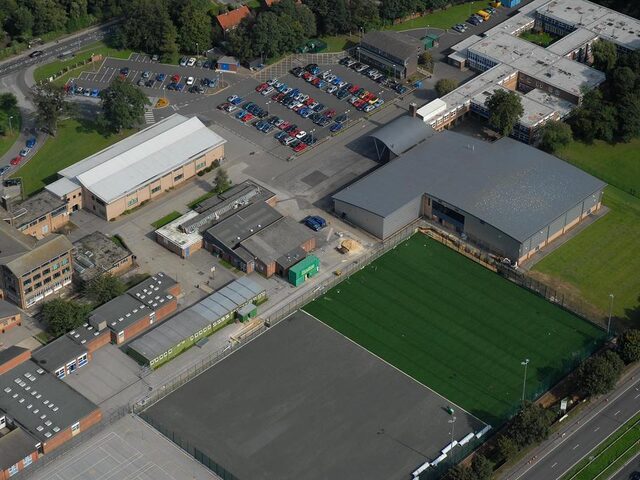
1994 - Hymers College Theatre
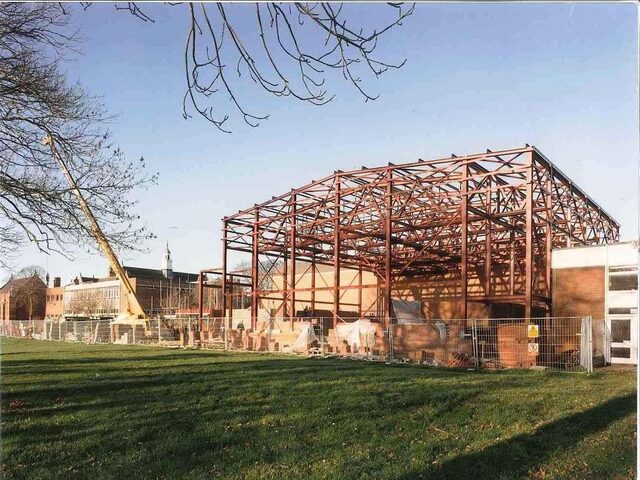
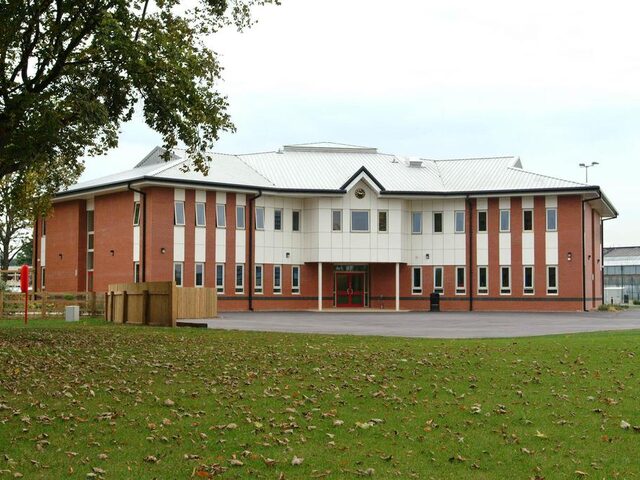
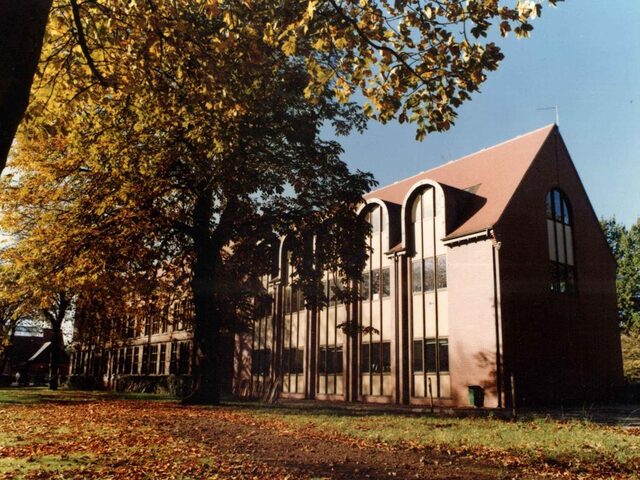
Houlton’s build Hymers College Dame Judi Dench Theatre
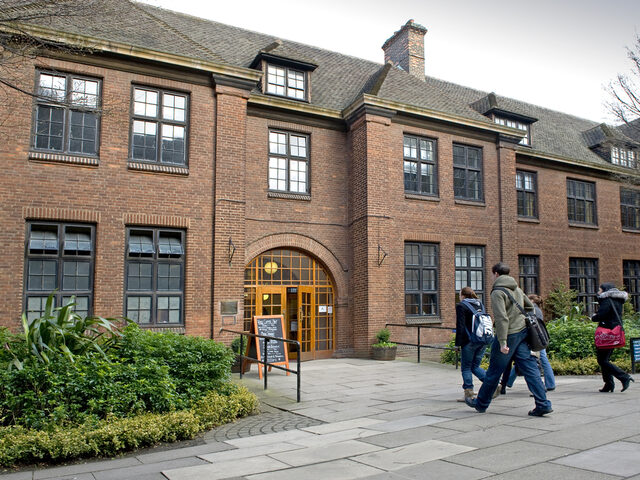
The Dame Judi Dench Theatre marked over 100 years of association with the school, from when George Houlton Senior constructed the main school building in 1893. Other work for Hymers included the Craft Design & Technology (CDT) block and new Junior School, which was completed in 2004 and replaced the old “temporary” Junior School which Houlton erected in 1964.
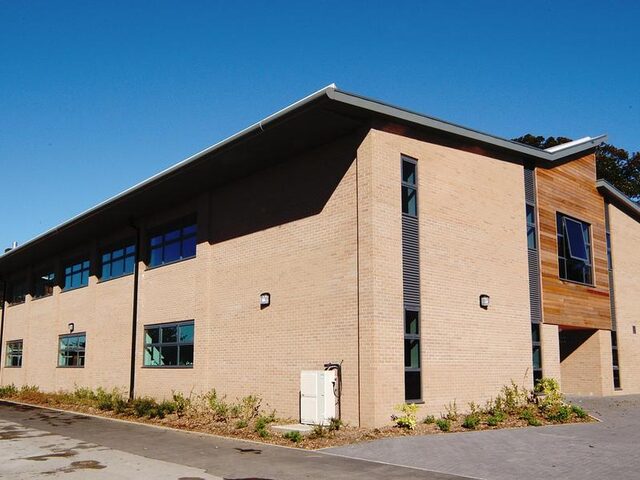
Important school work was also carried out at South Hunsley, with extensive refurbishments and new sports pitches between 2003-2007.
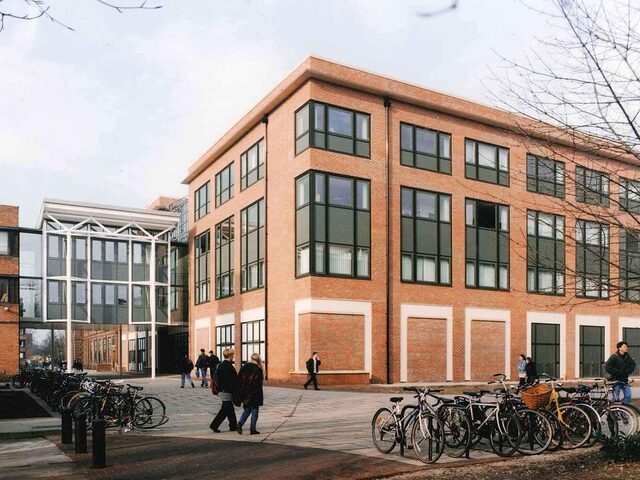
Other projects included extensive refurbishments for Bird’s Eye on Hessle Road (since demolished by us!), as well as the construction of their new 40,000ft², £10 million pea-processing plant (one of the largest in the world) in 2008. Work at the University of Hull has also been important, with the successful completion of the Ferens Building opened by HRH The Duchess of Kent in 1996, the Business School and the Logistics Institute.
2005
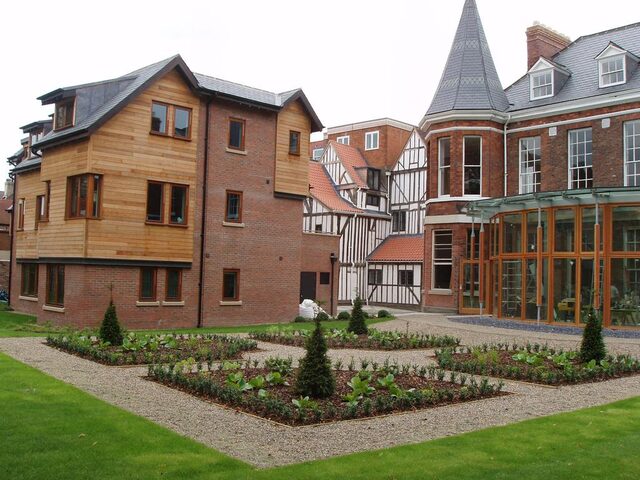
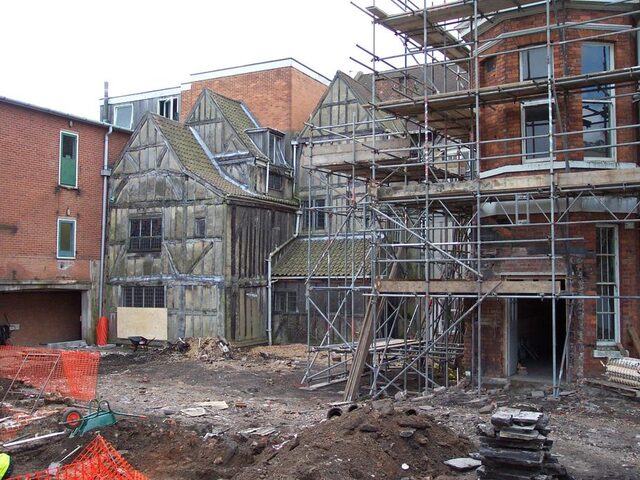
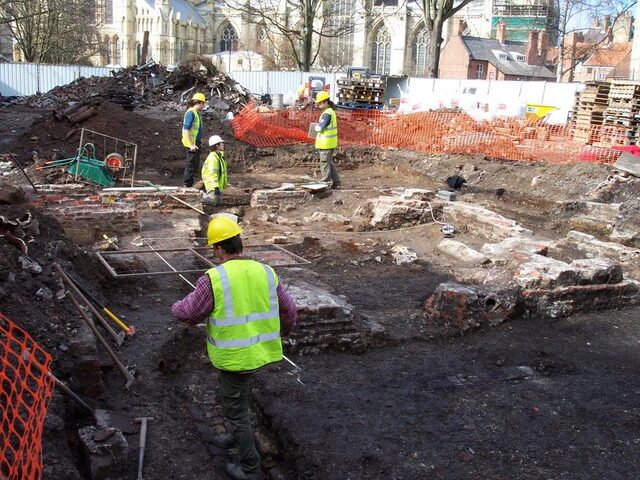
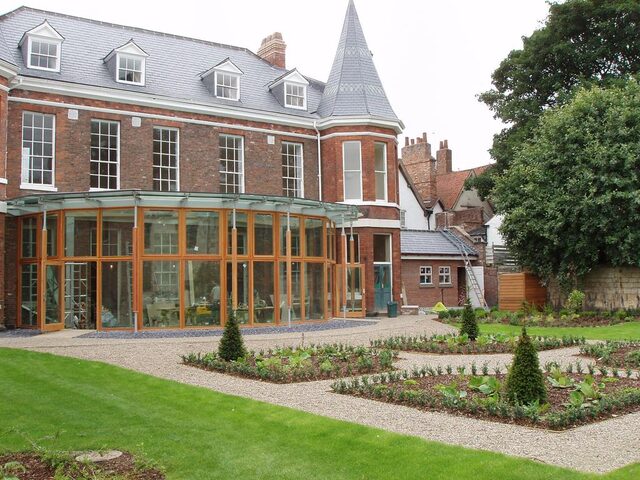
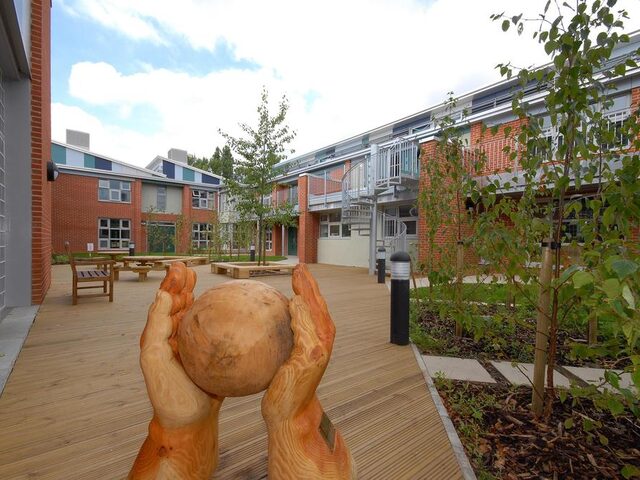
2005 - Award Winner Low Petergate, York
Low Petergate, York, winner of the Annual RICS pro-Yorkshire Conservation Award and the Overall Winner for 2005
A prestigious development for the company and for York, Low Petergate is a showcase for the high quality craftsmanship, development and sympathetic restoration on which Houlton prides itself.
The Low Petergate development was a private venture for the company, and is a redevelopment of the old York Girl’s school, a rambling building of Victorian, Georgian and Cromwellian elements in the shadow of York Minster. The site itself contains some of the best-preserved sections of Medieval York, and the team worked with onsite archaeologists to preserve and record as much as possible during demolition of the 1960s buildings and the redevelopment of the site.
The building is now a sympathetic combination of new build and restored elements, with a mixed use of residential and commercial. The firm worked with York Council and architects Malcolm Payne Group to ensure that the redevelopment was sympathetic to the surroundings as well as being to the highest standards of construction and craftsmanship.
The development was awarded by the Royal Institute of Chartered Surveyors with the Overall and Conservation award for the Yorkshire region, a testimony to the team’s hard work and the firm’s commitment to high professional standards.
2009
2009 - Celebrating 130 years of Building
2009 saw 130 years marked by global economic uncertainty after over a decade of prestigious contracts.
The past 15 years have been exceptional at Houlton, both in terms of the quality of our projects and the level of commitment shared by all our staff. The company has increasingly diversified into more specialist refurbishment and restoration projects, as well as still focusing on all types of industrial and commercial contracts.
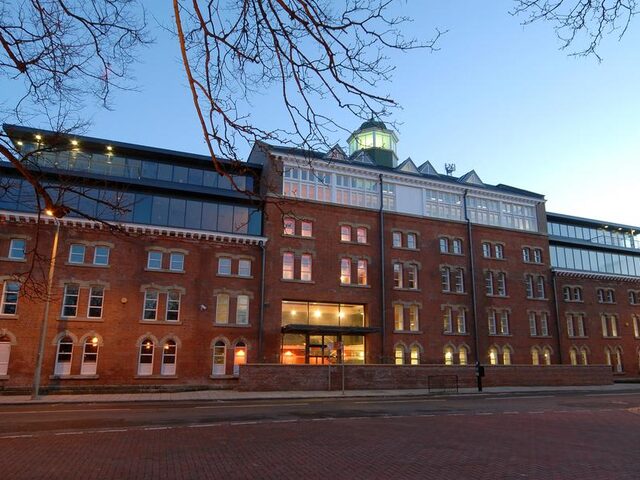
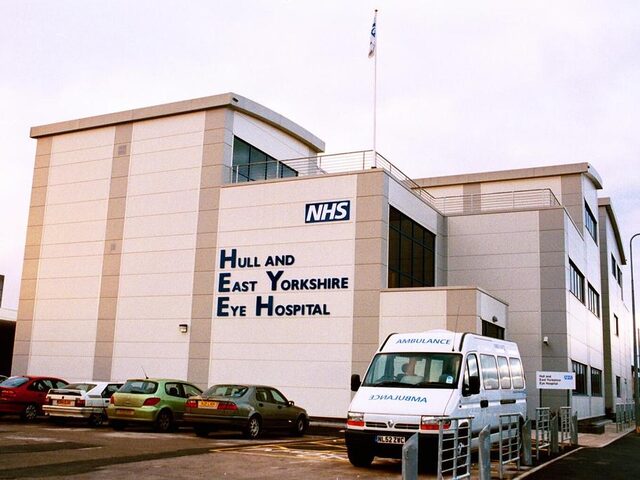
Contracts completed in this time include St. Mary’s Church Hall Beverley, Yorkshire Regional Health Office Headquarters Willerby, Image Data Systems Willerby, Bird’s Eye’s new factory, Hull Royal Infirmary Ophthalmology and High Dependency Units, Cranswick Foods repackaging warehouse, Hymers College Junior School, Hull University Business School and Logistics Institute, Scarborough Police Station, Scarborough Spa refurbishment, South Hunsley School refurbishments and new build, Castle Hill Breast Care Unit, The Maltings refurbishment, new buildings for Bishop Burton Agricultural College, Hull Fish Auction, Greenway School, Willerby Carr Lane Junior School, Premier Inn and Ramada Hotel York, Hull College Skills Construction Centre and History & Culture Centre Beverley.

2011
2011 - Company Archive Exhibition
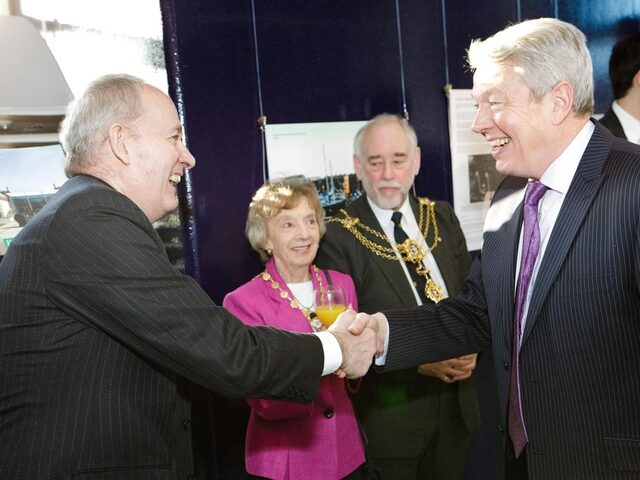
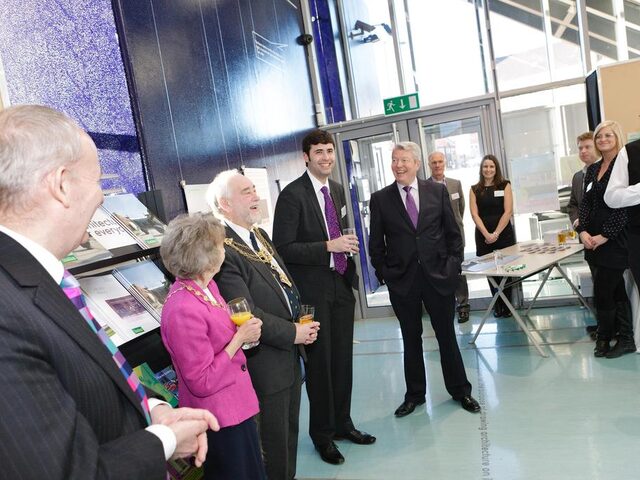
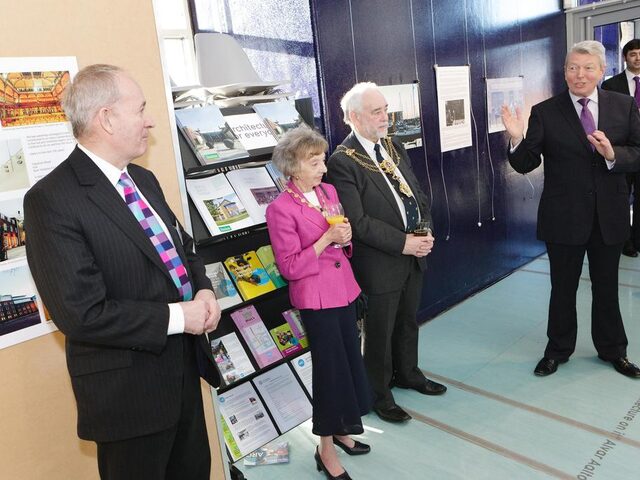
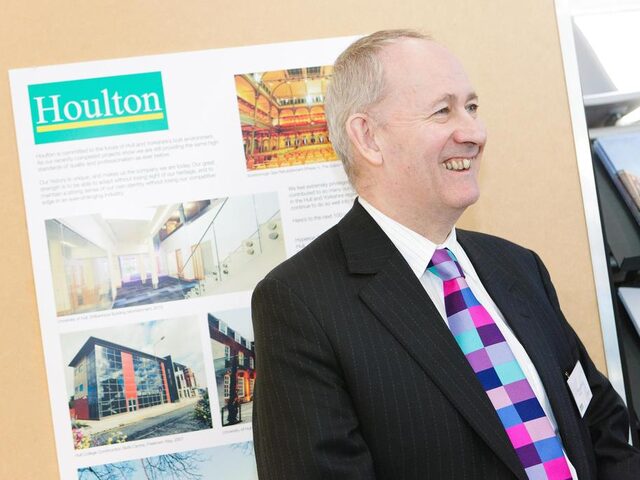
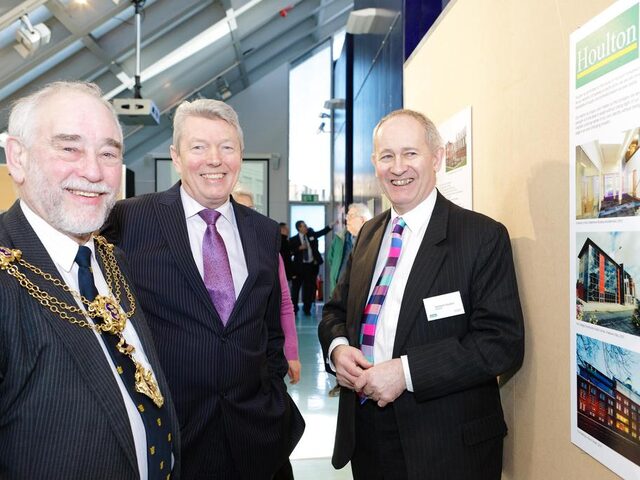
We were delighted to be able to celebrate over 130 years of business with a unique exhibition showcasing the Company’s history and the diverse range of successful projects we have completed over the years.
Rt Hon Alan Johnson MP showed his support for Houlton’s achievement by officially opening the exhibition at the ARC building in March 2011 which was attended by more than 50 of the region’s most influential business personalities, including Lord Mayor of Hull David Gemmell.
After his appointment as Non-Executive Director to the board, Thomas Houlton (the fifth generation of the Houlton family) collated and documented the Company's archives putting together the exhibition to commemorate the people and projects that have made Houlton one of the longest standing and most respected construction firms in the region.
“ Houlton has produced some outstanding buildings throughout the years and it has been rascinating for the team to research the Company archives to learn more about the technicalities and stories behind some iconic projects. The family is extremely proud of the achievements across the generations and we are delighted to be able to celebrate these with the current team. Houlton was founded as a family business and these values are still central to the Company's approach to our clients, employees and the wider community. ” Thomas Houlton, Non-Executive Director of Geo Houlton & Sons (Holdings) Ltd.
In addition to the exhibition, our recent project to restore the Charter House bell tower in Hull also produced a piece of history as we were presented with a copy of the invoice for one of Houlton’s very early projects on the site. The figures might have changed since the invoice was issued all the way back in 1887 but Houlton’s approach to quality and delivery certainly hasn’t.
2014
2014 - Celebrating 135 Years of Building
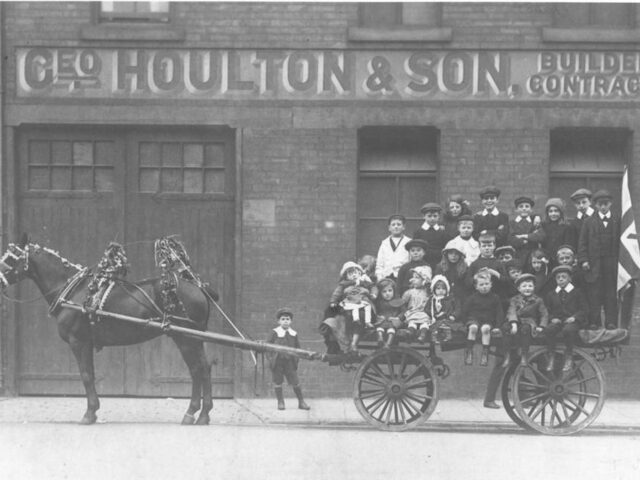
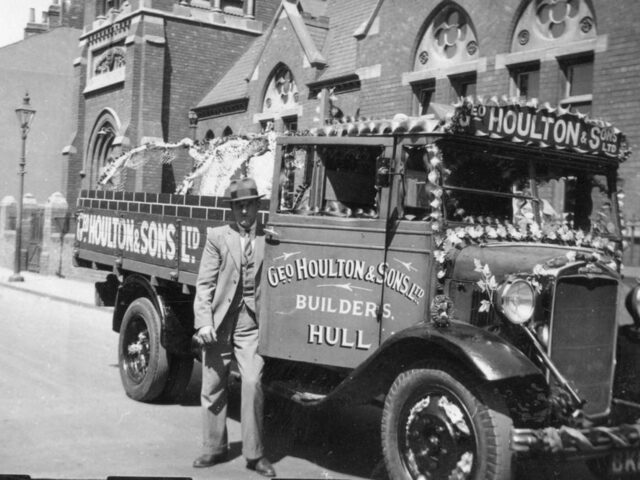
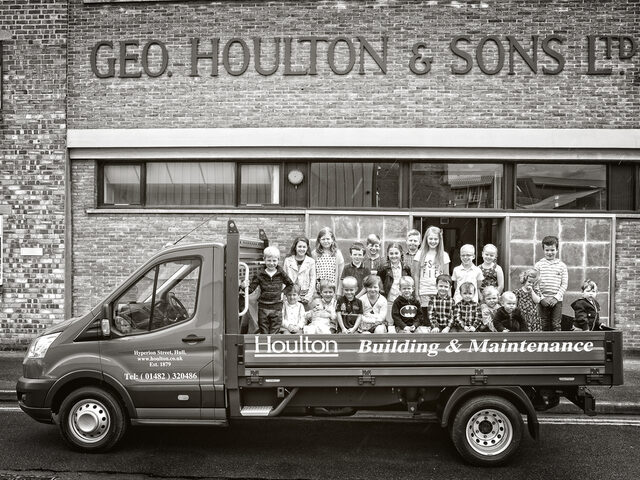
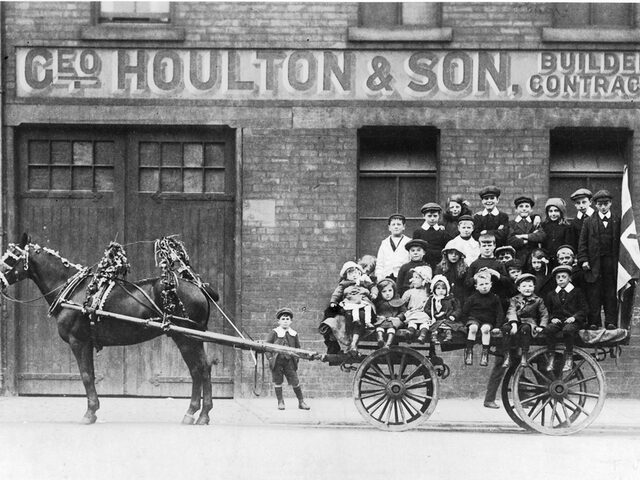
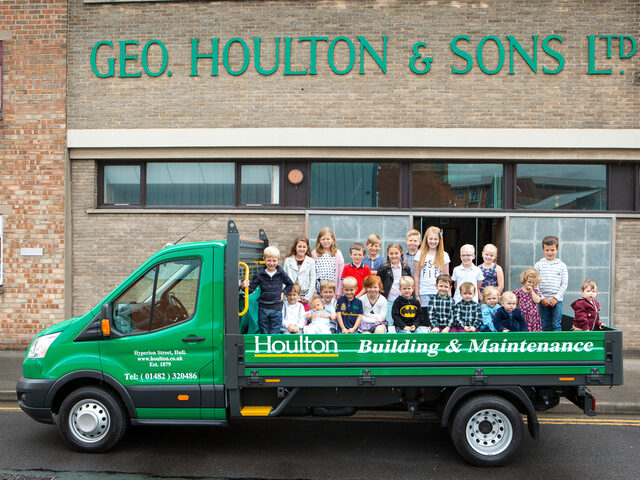
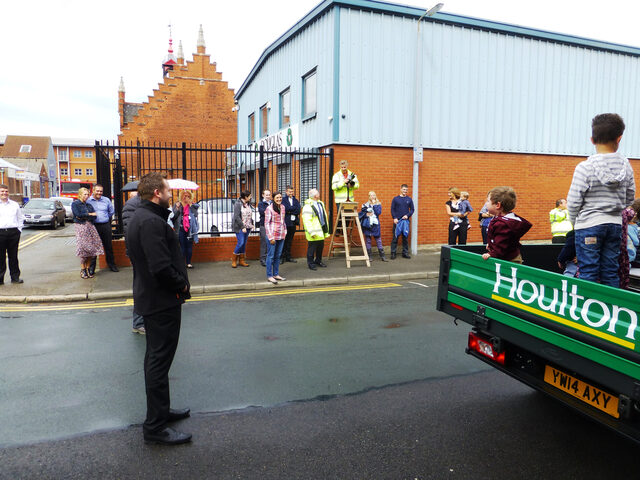
To celebrate 135 years of successful trading the company re-created the photograph of employees children on the latest company transport.
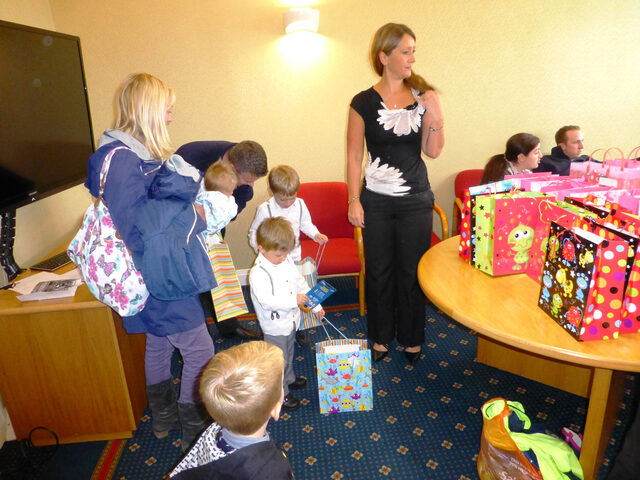
The original black and white photograph showed children on a horse and cart outside our Baker Street premises and we undertook a similar exercise outside our Hyperion Street offices with children on our latest pick-up truck. The children were very well behaved and suitably rewarded with a goodie bag afterwards as a thank you.
2017
2017 - Hull - UKs City of Culture - Building for the Future
2017 HULL - UK'S CITY OF CULTURE
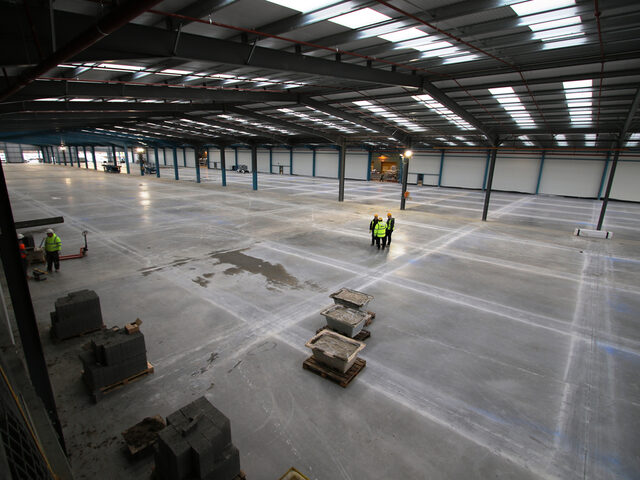
With over 135 years of expertise behind us and a team of dedicated and professional staff, Houlton offers a range of high quality construction and allied services based locally, regionally and nationally, forming strong partnerships with local councils, health and education authorities as well as private clients. From sensitive redevelopment, design-build projects, industrial, commercial and educational spaces, we are the foremost building contractor in the Yorkshire Region.
We continue to ensure a stable and sustainable future for our stakeholders.
Key features of Houlton for the future are that we will:
- Remain a Family owned business and maintain the Family Ethos – by being Caring and Sharing.
- Work principally in Hull, East Yorkshire and Lincolnshire – up to 80 miles approx from base.
- Obtain turnover levels commensurate with the needs of maintaining and rewarding stable employment for all and adequate return for Shareholders.
- Maintain products and services generally as existing - Building & Maintenance, Construction, Development and Plant, although we will continue to review all opportunities and risks to the business.
2019
2019 - Celebrating 140 Years of Building
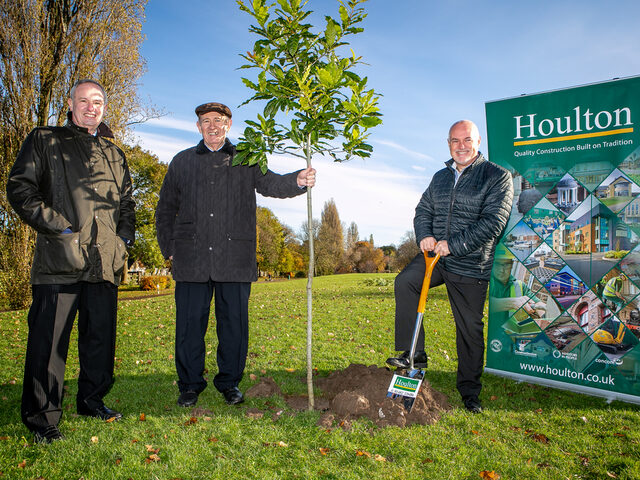
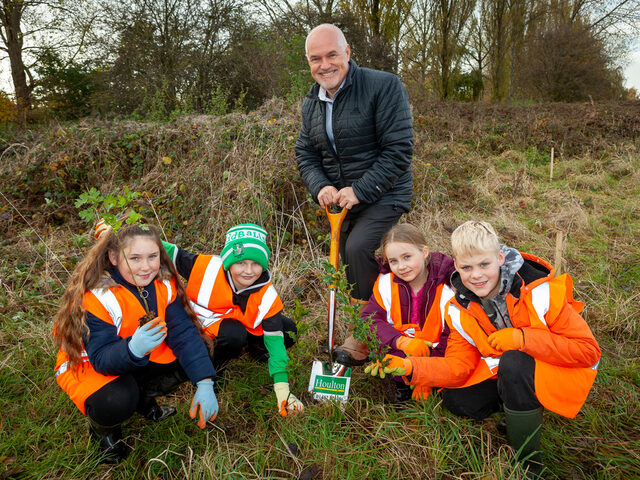
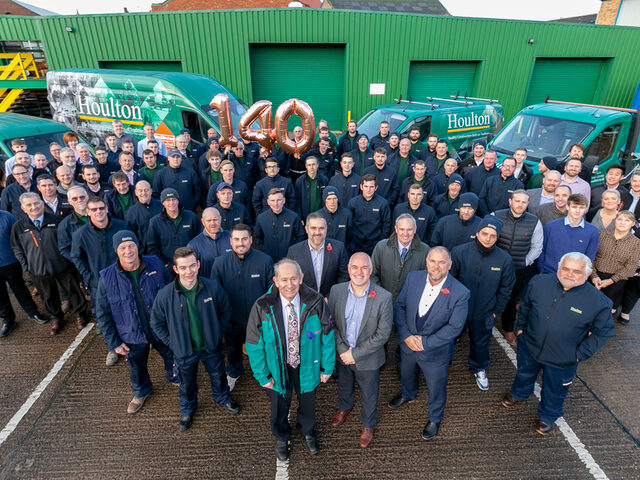
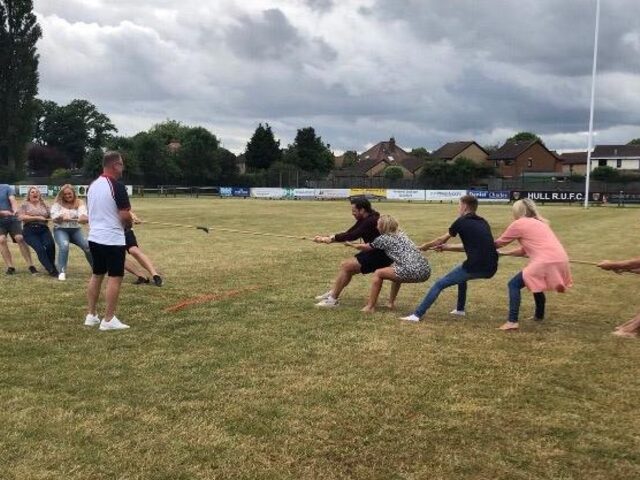
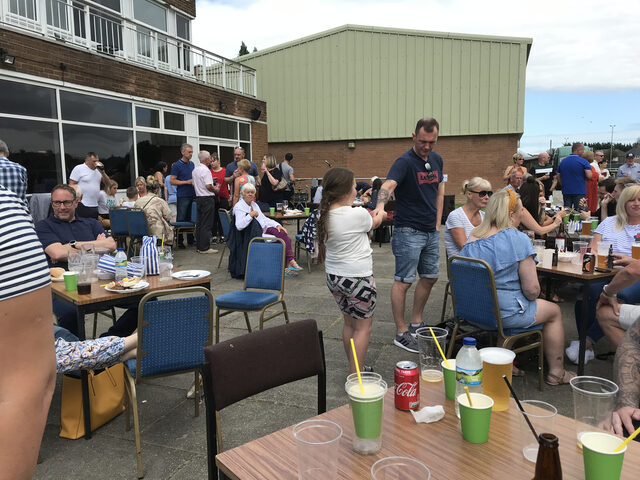
8th November 1879 was determined as the date that Houlton was first established by George Houlton Snr.. To mark the occasion of our 140th Year in 2019 we held several events throughout the year including a staff and family fun day, a Big Breakfast birthday, and celebration tree planting in East Park and at Rockford Fields Nature Reserve.
As part of our 140 year celebrations employees were asked for ideas on how we could celebrate 140 years in construction. One idea that particularly resonated was commemorative tree planting. This gave us the opportunity to give something back to the community, help the environment and leave a legacy within the city that could last for another 140 years.
The Family Fun Day was held at Hull Sports Centre and the event saw over 150 people in attendance across the day. After a scare with the weather, it turned into a fantastic event which also saw us raise over £500 for the Hull & East Yorkshire Children's University. Staff, retired staff and their families were invited to join in on various activities throughout the day.
On the 8th November 2019 birthday we gathered operatives, office staff and as many site staff as practically possible and set up a big breakfast servery at our offices for all to enjoy breakfast sandwiches, pastries and the opportunity to catch up with colleagues.

2021
New Fire Protection Division
The decision to set up Houlton's first new Division for over 20 years came after we gained our Q Mark for Installation and Maintenance of Fire Doors which was certified by BM Trada.
Keen to evolve our specialist service, and working with our strategic partners, we can deliver a full suite of Fire Prevention services, which means we can extend our Planned Preventative Maintenance and Reactive Maintenance programmes as well as our new build and refurbishment projects.

2021
Building a Stronger Future
As the construction industry adapted to the challenges of the COVID-19 pandemic, Brexit and changing market conditions, Houlton took the opportunity to reshape the business for the future. By merging its Construction and Building & Maintenance divisions, the company created a more efficient, resilient and client-focused organisation.
This strategic change laid the foundations for continued growth, enabling Houlton to build on its strong reputation while remaining financially sustainable for future generations.

2022
Appointment to the YORbuild3 Minor Works Framework
Houlton was delighted to be selected as a contractor on the YORbuild3 Minor Works Framework, continuing its long-standing association with YORhub since 2009.
The framework provides opportunities across a range of project values and regions, supporting the delivery of new build and refurbishment works for public sector clients throughout Yorkshire and the Humber.
This appointment reflects Houlton’s continued commitment to delivering high-quality construction services within established public sector frameworks, while supporting collaborative working, best practice and sustainable outcomes in line with the UK Government’s Construction Playbook and wider industry standards.
Our involvement in YORbuild3 further strengthens our position within the region’s public sector supply chain and builds on the success of previous YORbuild frameworks.
2024
Evolving Our Brand and Presence
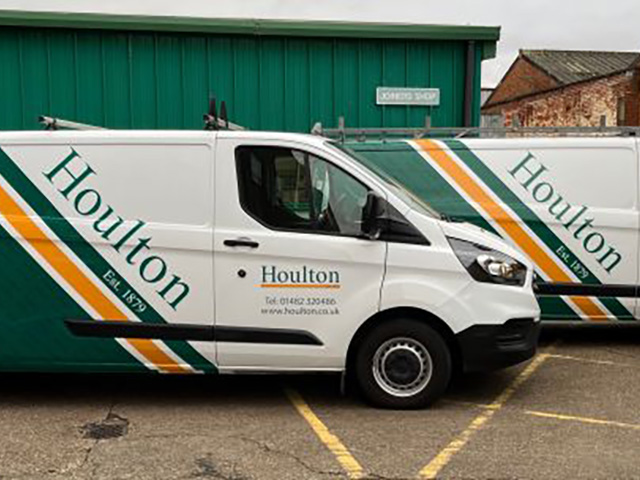
As part of the continued evolution of the business, Houlton launched a refreshed brand identity in 2024, modernising its logo and visual style to reflect the company as it is today.
The new branding was also rolled out across the company’s operational fleet, including vans and site vehicles, creating a consistent and professional presence both on the road and across projects. This update strengthened brand visibility and ensured Houlton’s identity was clearly represented in the communities where we work.

2026
Leadership Transition and Continued Growth
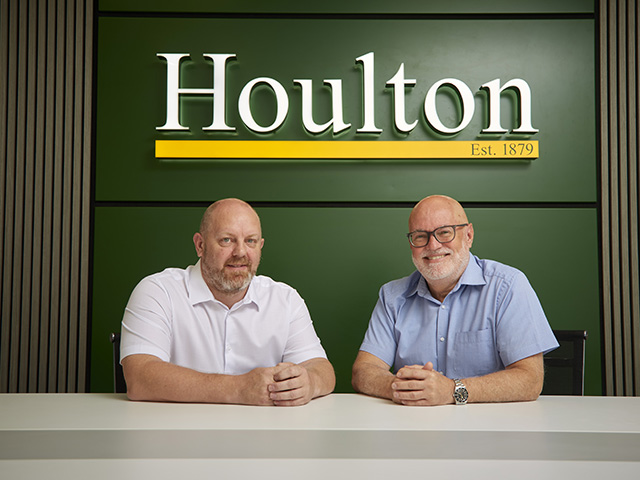
In 2026, Houlton entered an important new chapter in its leadership and structure, reflecting planned succession and continued business growth.
After many years of dedicated service, Managing Director Andrew Kingston retired from his role, having played a central part in shaping and leading the business through a period of significant development and change. Andrew continues to support the business on a part-time basis, providing guidance and continuity during the transition.
Following Andrew’s retirement, Mike Johnson, previously Operations Director, was appointed Managing Director. Mike’s promotion reflects his strong leadership and in-depth understanding of the business, and he now leads Houlton into its next phase of development.
As part of the wider leadership progression within the company, Dean Burdick was promoted from Contracts Manager to Operations Manager in 2025 and has now progressed to Operations Director in 2026, reflecting his continued contribution to the successful delivery of projects and operational performance.
These changes mark a natural evolution of Houlton’s leadership team, strengthening the business for the future while maintaining continuity, experience and a clear focus on delivering high-quality projects for our clients.